4-Chloro-9,10-dioxo-9,10-dihydroanthracene-1-carboxylic acid → 1-Chloroanthraquinone
Reaction equation

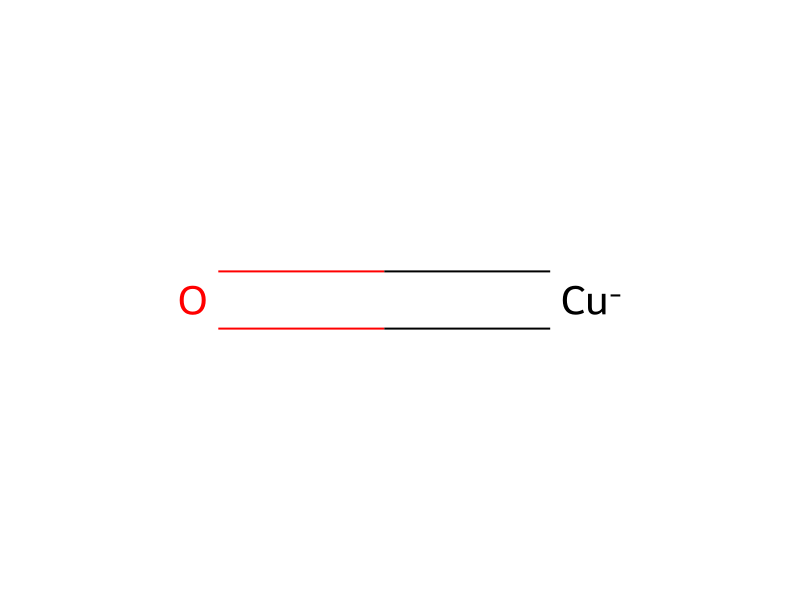
[Cl:1][C:2]1[C:15]2[C:14](=[O:16])[C:13]3[C:8](=[CH:9][CH:10]=[CH:11][CH:12]=3)[C:7](=[O:17])[C:6]=2[C:5](C(O)=O)=[CH:4][CH:3]=1>[Cu-]=O.CN1CCCC1=O>[Cl:1][C:2]1[C:15]2[C:14](=[O:16])[C:13]3[C:8](=[CH:9][CH:10]=[CH:11][CH:12]=3)[C:7](=[O:17])[C:6]=2[CH:5]=[CH:4][CH:3]=1Participants
4
Reactant 1

Product 1

Reagents, catalysts & solvents 2

Conditions
- Temperature
- 150 °C
Procedure
A mixture of 25 parts of 4-chloroanthraquinone-1-carboxylic acid, 180 parts of N-methylpyrrolidone, 4 parts of copper(I) oxide and 3 parts of o-phenanthroline hydrochloride is heated for two hours at 150°C. The mixture is poured onto ice and the precipitate formed is suction filtered. After the filter cake has been dissolved in 100 parts of concentrated sulfuric acid and reprecipitated with 300 parts of water, filtered and dried in vacuo at 80°C there are isolated 19 parts (90.5% of theory) of 1-chloroanthraquinone having a melting point of 156° to 158°C.
Workup
- additionThe mixture is poured onto ice
- customthe precipitate formed
- filtrationfiltered
- dissolutionAfter the filter cake has been dissolved in 100 parts of concentrated sulfuric acid
- customreprecipitated with 300 parts of water
- filtrationfiltered
- customdried in vacuo at 80°C
Sources & evidence
- ORD record
- ord-ea878a583d8f4a88982a42476b2499df
- Source dataset
- uspto-grants-1976_08
- Patent number
- US03978096
Reaction notes
Loading…