Dimethyl Sulfide → Cyclopentanepropanol
Reaction equation

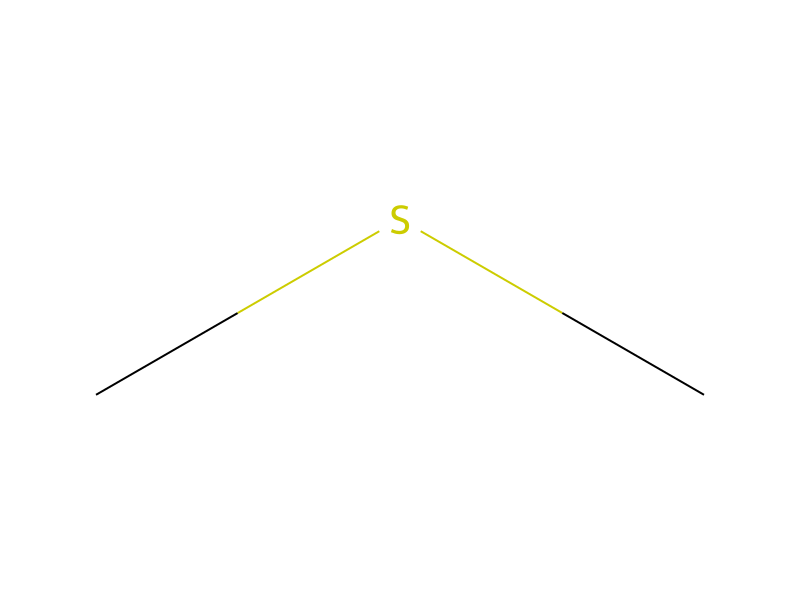
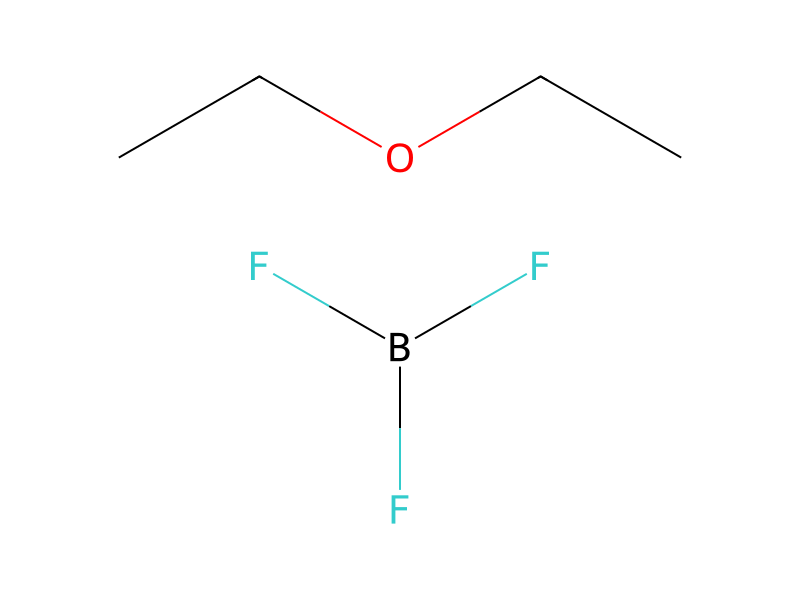
[BH4-].[Na+].CSC.B(F)(F)F.CCOCC.[CH:15]1([CH2:20][CH2:21][C:22](O)=[O:23])[CH2:19][CH2:18][CH2:17][CH2:16]1>O1CCCC1>[CH:15]1([CH2:20][CH2:21][CH2:22][OH:23])[CH2:19][CH2:18][CH2:17][CH2:16]1Participants
Reactant 4


Product 1

Reagents, catalysts & solvents 1

Procedure
A 12-liter, 4-necked glass reaction vessel equipped as described in Example 1 was charged with 180 grams (4.75 moles) of sodium borohydride, 4 liters of tetrahydrofuran, 0.485 liter (6.6 moles) of dimethyl sulfide, and 0.74 liter (6.0 moles) of boron trifluoride diethyl etherate at 0°-5°C using essentially the same procedure as described in Example 1. After stirring for a additional 0.5 hour at 20°-25°C, 780 grams (5.5 moles) of 3-cyclopentylpropionic acid was added dropwise over a 3 hour period while maintaining a temperature of 35°-40°C. After standing overnight at room temperature, hydrolysis of the reaction mixture followed by distillation of the crude product gave 613 grams (87.5% yield) of 3-cyclopentyl-1-propanol, bp 93°-95°C at 8 mm, n20D 1.4595.
Workup
- customA 12-liter, 4-necked glass reaction vessel
- customequipped
- temperaturewhile maintaining a temperature of 35°-40°C
- waitAfter standing overnight at room temperature
- customhydrolysis of the reaction mixture
- distillationfollowed by distillation of the crude product
Sources & evidence
- ORD record
- ord-5a763bc400024e8292ec2347d932b47e
- Source dataset
- uspto-grants-1976_08
- Patent number
- US03978140
Reaction notes
Loading…