Piperazine → Sodium 2-(4-(2-hydroxyethyl)piperazin-1-yl)ethanesulfonate
Reaction equation

S([CH2:5][CH2:6][OH:7])([O-])(=O)=O.[Na+:8].N1CCNCC1.S(CCO)(O)(=O)=O.[N:22]1([CH2:28][CH2:29][S:30]([O-:33])(=[O:32])=[O:31])[CH2:27][CH2:26][NH:25][CH2:24][CH2:23]1.[Na+].C1OC1>O>[OH:7][CH2:6][CH2:5][N:25]1[CH2:26][CH2:27][N:22]([CH2:28][CH2:29][S:30]([O-:33])(=[O:31])=[O:32])[CH2:23][CH2:24]1.[Na+:8]Participants


Conditions
- Temperature
- 200 fahrenheit
Procedure
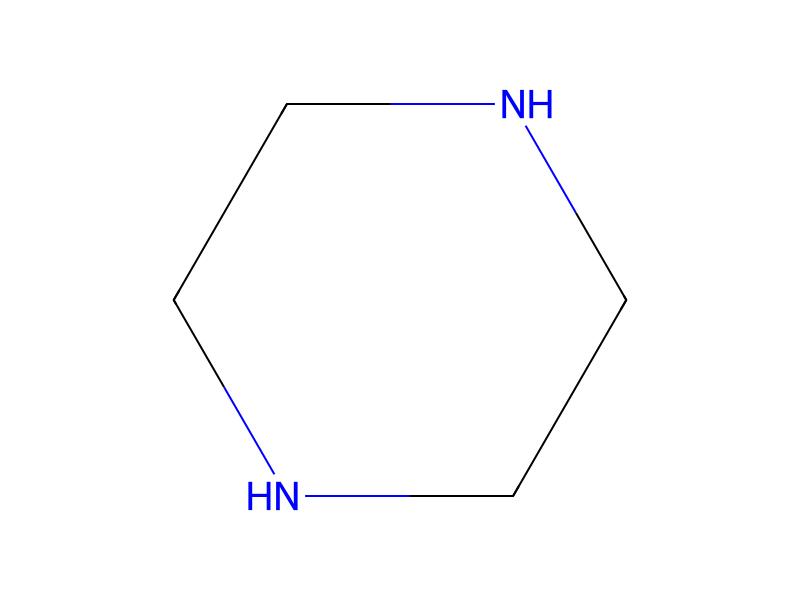
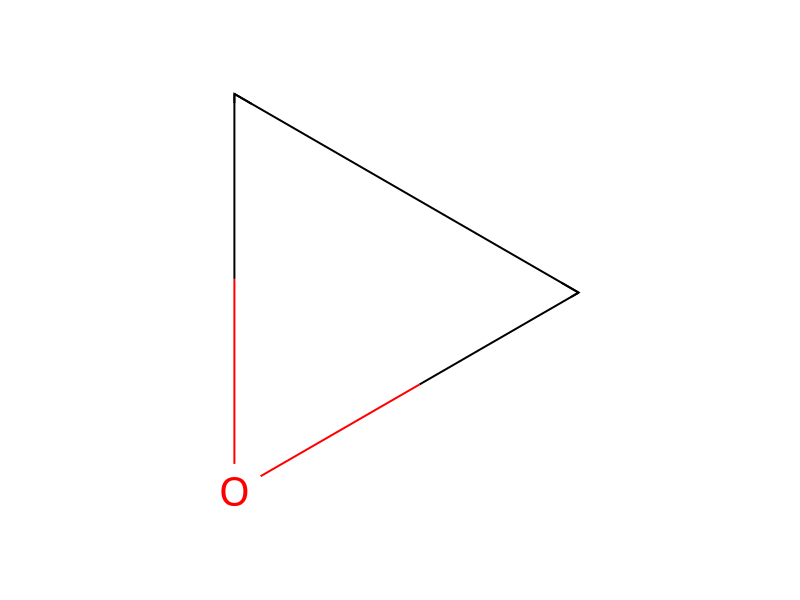
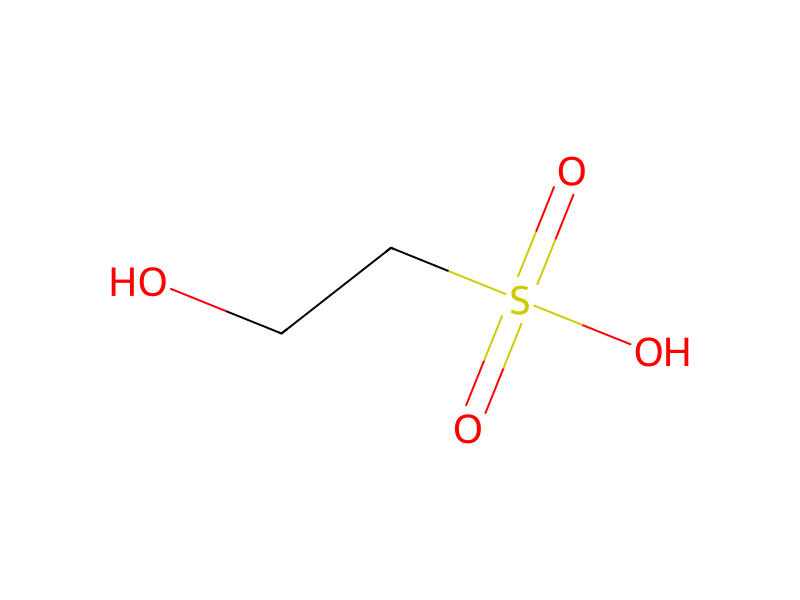
Forty-four grams of ethylene oxide (1 mole) is bled into a reaction vessel containing 104 grams of sodium bisulfite in water (45 percent by weight). The mixture is agitated at ambient temperature and 100 psi pressure during the addition of the bisulfite. The reactants interact to form an aqueous isethionic acid salt comprising 54 percent by weight sodium isethionate. A quantity of 86 grams of piperazine (1 mole) is admixed with the solution and the admixture is heated to a temperature of about 200° F. at atmospheric pressure. The reaction vessel has a cold finger trap attached thereto in communication with the contents of the reaction vessel. As the reaction progresses, water is produced as a by-product of the reaction which vaporizes as it is formed together with the other water present and which is collected as ice crystals upon the cold finger trap. The heating is continued for approximately 4 hours after which approximately 38 percent by weight of the reactants (about 127 grams) in the reaction vessel have collected upon the cold finger trap as ice crystals. The remaining liquid reaction product is analyzed and found to comprise sodium N-piperazineethanesulfonate. Further reaction with 44 grams of ethylene oxide (1 mole) at ambient conditions results in the formation of sodium N'-hydroxyethyl-N-piperazineethanesulfonate.
Workup
- customAs the reaction progresses
- customis collected as ice crystals upon the cold finger trap
- customafter which approximately 38 percent by weight of the reactants (about 127 grams) in the reaction vessel have collected upon the cold finger trap as ice crystals
- customThe remaining liquid reaction product
Sources & evidence
- ORD record
- ord-271630b7482b451f94d5d81ab50da86f
- Source dataset
- uspto-grants-1986_01
- Patent number
- US04563291
Reaction notes
Loading…