Sulfuric Acid → 3,5-Dimethyl-4-(6-hydroxytetrahydropyran-2-ylethyl)-isoxazole
Reaction equation

CC1C(C=CC2CCC=CO2)=C(C)ON=1.C(=O)(O)[O-].[Na+].[CH3:21][C:22]1[C:26]([CH:27]=[CH:28][CH:29]2[CH2:34][CH2:33][CH2:32][CH:31]([O:35]CC)[O:30]2)=[C:25]([CH3:38])[O:24][N:23]=1.[H][H].CC1C(CCC2CCCC(OCC)O2)=C(C)ON=1.S(=O)(=O)(O)O>S(=O)(=O)(O)O.[Pd].O1CCOCC1.C(OCC)(=O)C.C(O)C>[CH3:21][C:22]1[C:26]([CH2:27][CH2:28][CH:29]2[CH2:34][CH2:33][CH2:32][CH:31]([OH:35])[O:30]2)=[C:25]([CH3:38])[O:24][N:23]=1Participants
Reactant 6
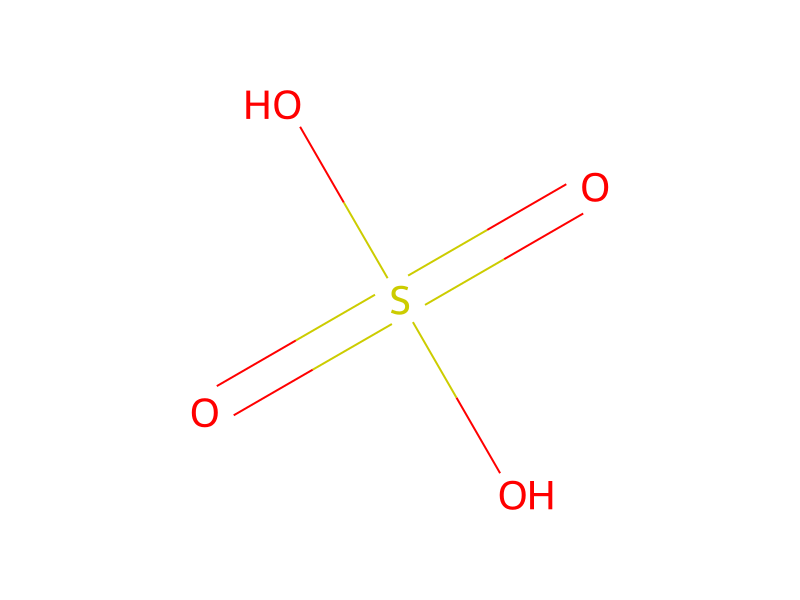 HCID 1118Sulfuric Acid
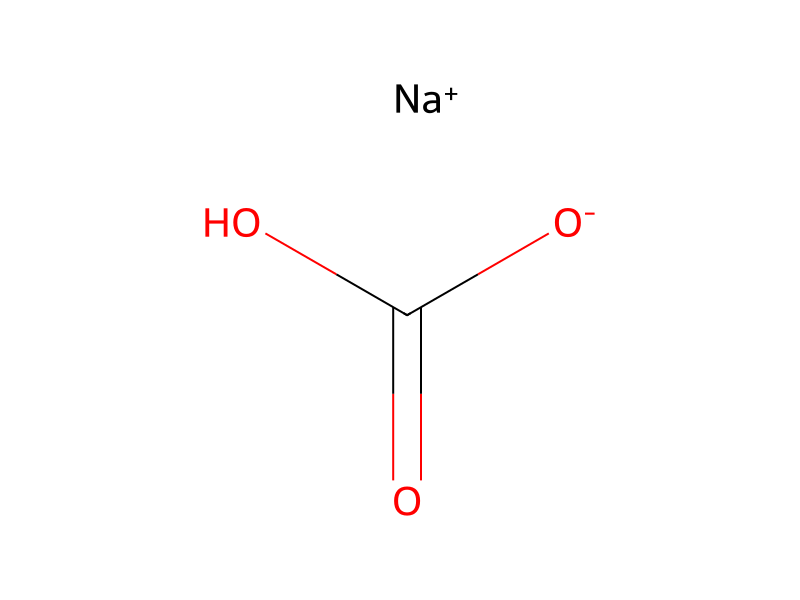 HCID 516892Sodium Bicarbonate2×
 HCID 54110067Racemic 3,5-dimethyl-4-(6-ethoxytetrahydropyran-2-ylethyl)-isoxazole
 HCID 706238504-[2-(3,4-Dihydro-2H-pyran-2-yl)ethenyl]-3,5-dimethyl-1,2-oxazole
 HCID 70623959Racemic 3,5-dimethyl-4-(6-ethoxytetrahydropyran-2-ylvinyl)isoxazole
 HCID 178418361HCID 178418361, compound
Product 1

Reagents, catalysts & solvents 5
Procedure
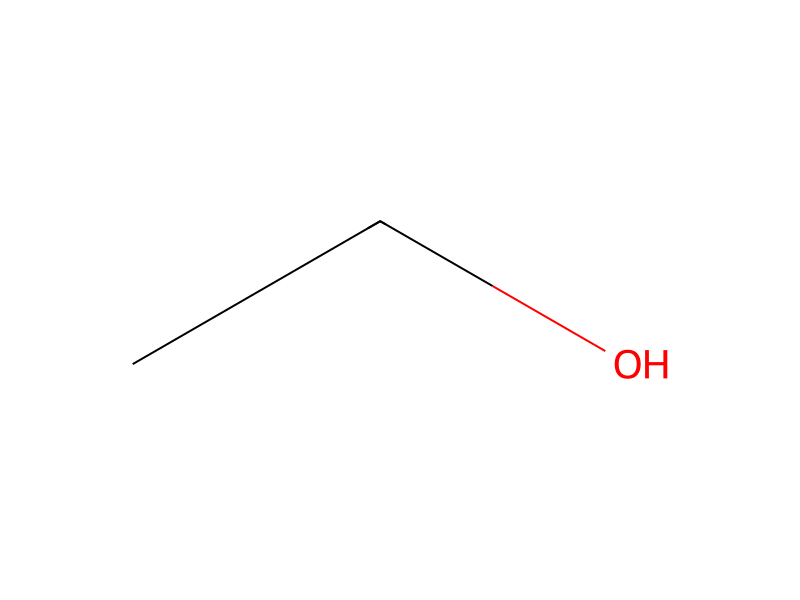
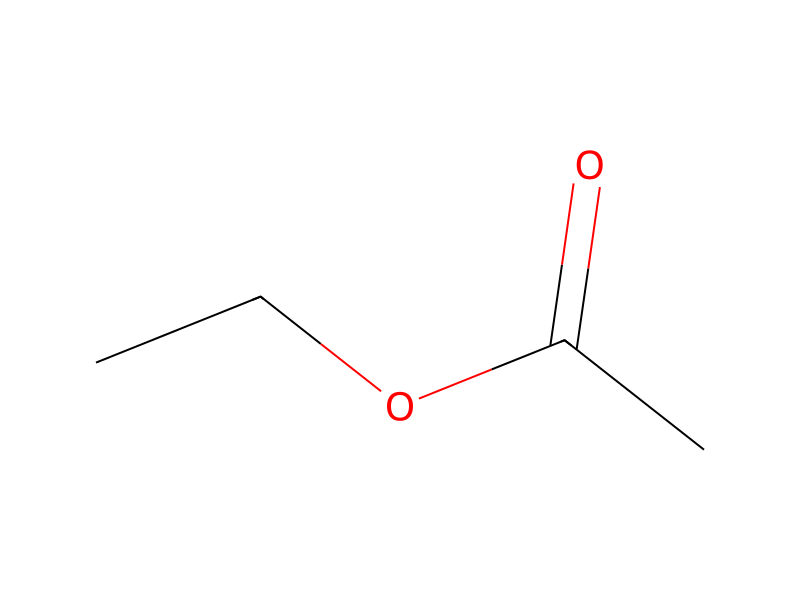
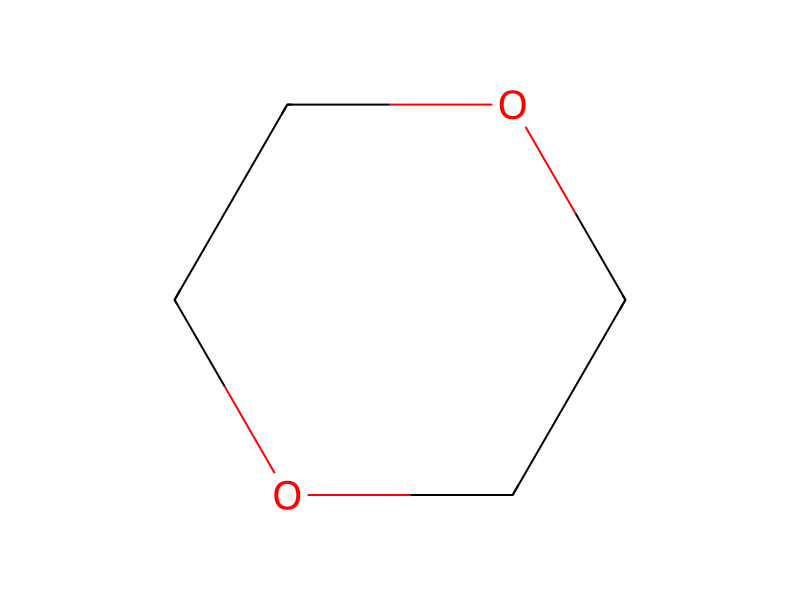
To a solution of 1.0 g. (4.88 mmoles) of 3,5-dimethyl-4-(3,4-dihydro-2H-pyran-2-ylvinyl) isoxazole, prepared as described in Example 5 above, in 10 ml. of ethanol was added 5 drops of 1N sulfuric acid. The solution was stirred at room temperature overnight, poured into excess saturated aqueous sodium bicarbonate solution, and extracted with ether. The ether extracts were washed with water and saturated brine and dried over anhydrous sodium sulfate. Solvent removal gave 1.25 g. of pale yellow liquid whose infrared specrum indicated that formation of racemic 3,5-dimethyl-4-(6-ethoxytetrahydropyran-2-ylvinyl)isoxazole was complete. This material was taken up in 10 ml. of ethyl acetate. To this solution was added 25 mg. of 10 percent palladium on carbon and the resulting mixture was hydrogenated at room temperature and atmospheric pressure. After 2 hr., one equivalent of hydrogen had been consumed and uptake ceased. The catalyst was removed by filtration and washed with fresh ethyl acetate. Solvent removal from the filtrates gave 1.28 g. of racemic 3,5-dimethyl-4-(6-ethoxytetrahydropyran-2-ylethyl)-isoxazole as a colorless oil whose infrared spectrum indicated that the hydrogenation was complete. This crude acetal was taken up in 20 ml. of dioxane. To the flask was added 10 ml. of 1N sulfuric acid and the resulting solution was stirred at room temperature for 4 hr. It was then poured into excess saturated aqueous sodium bicarbonate solution and extracted with ether. The ether extracts were washed with saturated brine and dried over anhydrous sodium sulfate. Solvent removal gave racemic 3,5-dimethyl-4-(6-hydroxytetrahydropyran-2-ylethyl)-isoxazole as a viscous oil. The crude hemiketal was taken up in 25 ml. of 1,2-dichloroethane, degassed and placed under nitrogen. To the flask was added 7.5 g. of manganese dioxide and the resulting suspension was stirred at room temperature overnight. The manganese dioxide was removed by filtration and washed with fresh solvent. Solvent removal from the filtrates gave a pale yellow resin which was crystallized from ether at -20°C. to give the desired acetone as a white solid of m.p. 60°-62°. A similarly prepared sample was shown by its infrared and nmr spectra, mixture melting point, and thin layer chromatographic behvior to be identical with the material prepared as described above in part A.
Workup
- extractionextracted with ether
- washThe ether extracts were washed with water and saturated brine
- dry with materialdried over anhydrous sodium sulfate
- customSolvent removal
- customgave 1.25 g
- additionTo this solution was added 25 mg
- customwas hydrogenated at room temperature
- waitAfter 2 hr
- customThe catalyst was removed by filtration
- washwashed with fresh ethyl acetate
- customSolvent removal from the filtrates
- customgave 1.28 g
- additionTo the flask was added 10 ml
- extractionextracted with ether
- washThe ether extracts were washed with saturated brine
- dry with materialdried over anhydrous sodium sulfate
- customSolvent removal
Sources & evidence
- ORD record
- ord-7d9c46d9f5714401a3c96fabcc585771
- Source dataset
- uspto-grants-1976_10
- Patent number
- US03985771
Reaction notes
Loading…