2-Oxoglutaric Acid → L-Hydroxyproline
Reaction equation

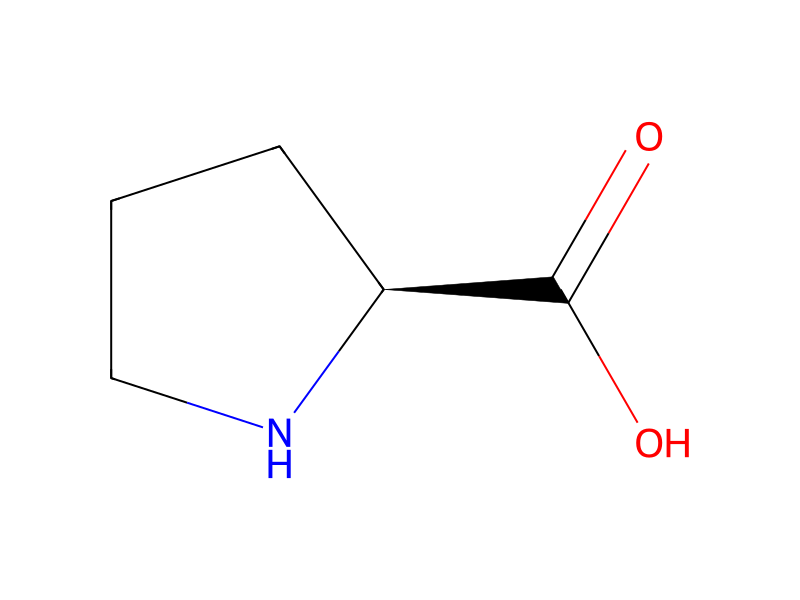
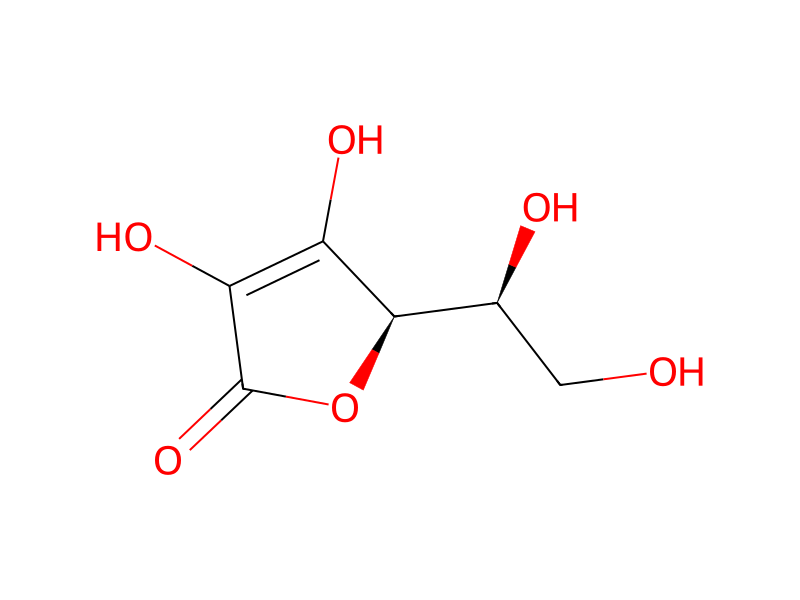
[NH:1]1[CH2:8][CH2:7][CH2:6][C@H:2]1[C:3]([OH:5])=[O:4].[O:9]=C(CCC(O)=O)C(O)=O.O=C1O[C@H]([C@H](CO)O)C(O)=C1O>>[OH:9][C@H:7]1[CH2:8][NH:1][C@H:2]([C:3]([OH:5])=[O:4])[CH2:6]1Participants


Conditions
- Temperature
- 100 °C
Procedure
The reaction mixture was composed of 80 mM TES buffer (pH 7.5), 4 mM L-proline, 8 mM 2-ketoglutaric acid, 2 mM ferrous sulfate, 4 mM L-ascorbic acid, 2 mg/ml catalase and a pre-determined amount of the pure enzyme, the total volume being 500 μl. The reaction was initiated by addition of the enzyme and continued for 15 minutes at 30° C. The reaction was stopped by heating the reaction mixture at 100° C. for 2 minutes. The amount of trans-4-hydroxy-L-proline formed in the reaction mixture was determined by the pre-column derivatization method. One hundred microliter of 0.3M boric acid buffer (pH 10.7), 4 μl of aqueous solution of 10% (v/v) mercaptoethanol and 16 μl of ethanol solution of 5% (w/v) OPA were added to 100 μl of the reaction mixture, and the mixture was allowed to stand at 60° C. for 30 seconds. In addition, 50 μl of ethanol solution of 2% (W/V) NBD was added thereto and the mixture was allowed to stand at 60° C. for 40 minutes. The reaction was stopped by adding 30 μl of 1 N HCl to the reaction mixture, and the precipitates formed were removed therefrom by centrifugation and filtration. The trans-4-hydroxy-L-proline formed by the reaction was quantitatively determined by HPLC analysis.
Workup
- additionThe reaction was initiated by addition of the enzyme
Sources & evidence
- ORD record
- ord-635b80c3e8e649e791e54487606344cf
- Source dataset
- uspto-grants-2007_07
- Patent number
- US07238501B2
Reaction notes
Loading…