Iodide Ion → 5-(4-Methoxyphenyl)pent-4-yn-1-ol
Reaction equation

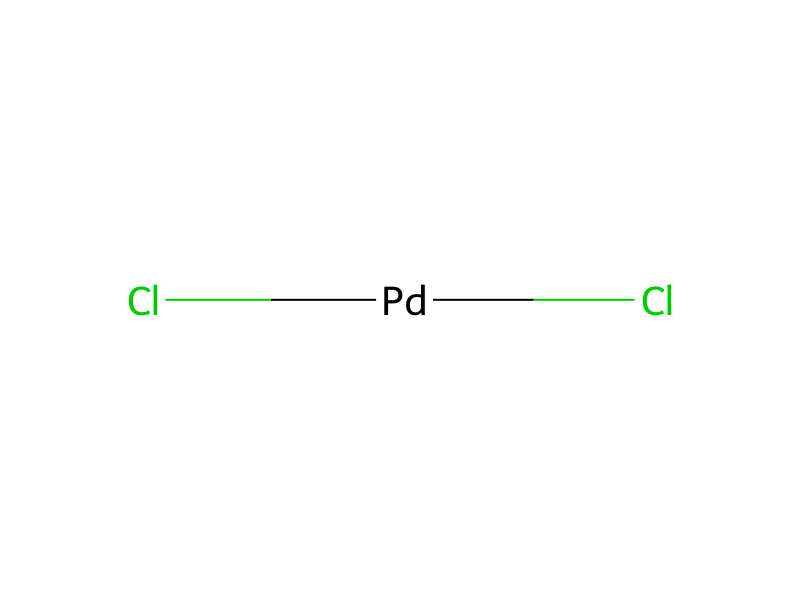
I[C:2]1[CH:7]=[CH:6][C:5]([O:8][CH3:9])=[CH:4][CH:3]=1.[I-].[CH2:11]([OH:16])[CH2:12][CH2:13][C:14]#[CH:15]>C(NCC)C.[Pd](Cl)Cl.C1(P(C2C=CC=CC=2)C2C=CC=CC=2)C=CC=CC=1>[CH3:9][O:8][C:5]1[CH:6]=[CH:7][C:2]([C:15]#[C:14][CH2:13][CH2:12][CH2:11][OH:16])=[CH:3][CH:4]=1Participants





Procedure
4-Iodoanisol (10 g, 42 mmol), palladium (II) chloride (0.2 g, 1.1 mmol) and triphenylphosphine (0.6 g, 2.2 mmol) were dissolved in diethylamine (100 mL) then cupper(I) iodide (0.5 g, 2.2 mmol) and 4-pentyn-1-ol (5 mL, 53 mmol) were added. The reaction mixture was stirred overnight at room temperature, then the solvent was removed under reduced pressure. Ethyl acetate (150 mL) was added to the residue and the mixture was washed with 2N HCl, brine and water. The organic fraction was isolated, dried with sodium sulfate and the solvent was removed under reduced pressure. The product 16 (7.1 g. 87%) was isolated by flash chromatography (silica gel, 1:2 ethyl acetate/hexanes) as an oily yellow solid. 1H NMR (300 MHz, CDCl3) δ 1.88 (m, 2H), 2.53 (m, 2H), 3.72 (s, 3H), 3.74 (m, 2H), 6.83 (d, 2H), 7.45 (d, 2H).
Workup
- customthe solvent was removed under reduced pressure
- additionEthyl acetate (150 mL) was added to the residue
- washthe mixture was washed with 2N HCl, brine and water
- customThe organic fraction was isolated
- dry with materialdried with sodium sulfate
- customthe solvent was removed under reduced pressure
Sources & evidence
- ORD record
- ord-94a0d6a85cca47049d6593396fa7af87
- Source dataset
- uspto-grants-2007_07
- Patent number
- US07241766B2
Reaction notes
Loading…