4-Nitrophenyl chloroformate → 3-(6,8-Dichloro-2-methyl-1,2,3,4-tetrahydroisoquinolin-4-yl)aniline
Reaction equation

[Cl:1][C:2]1[CH:3]=[C:4]2[C:9](=[C:10]([Cl:12])[CH:11]=1)[CH2:8][N:7]([CH3:13])[CH2:6][CH:5]2[C:14]1[CH:19]=[CH:18][C:17]([C@@](O)([C@@H](O)[C@H](O)[C@H](O)CO)C(N)=O)=[CH:16][CH:15]=1.ClC(OC1C=CC([N+:43]([O-])=O)=CC=1)=O>>[Cl:1][C:2]1[CH:3]=[C:4]2[C:9](=[C:10]([Cl:12])[CH:11]=1)[CH2:8][N:7]([CH3:13])[CH2:6][CH:5]2[C:14]1[CH:19]=[C:18]([NH2:43])[CH:17]=[CH:16][CH:15]=1Participants
3
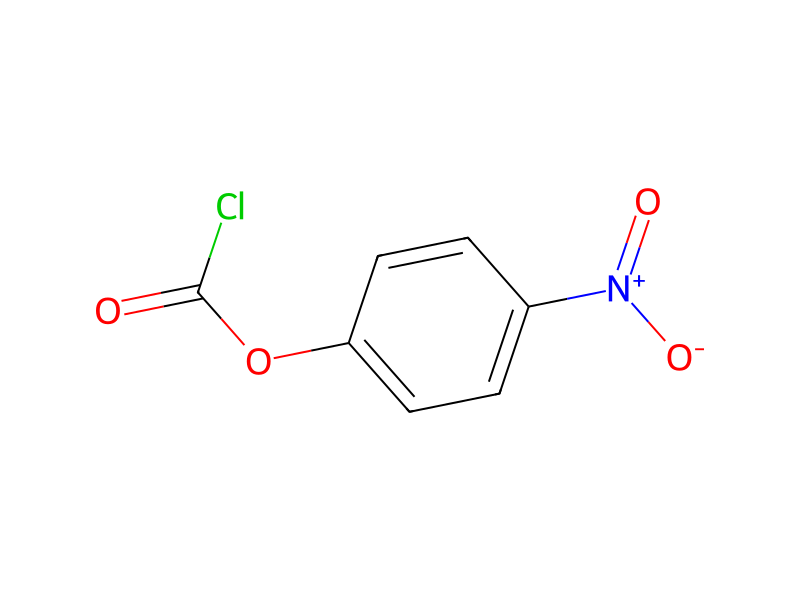


Procedure
1.54 g (5.0 mmol) of enantiomer B of intermediate 1 were reacted with 1.1 equivalents of 4-nitrophenyl chloroformate in a similar manner to the method described in Example 6, intermediate 1 to obtain 1.87 g of the title compound.
Sources & evidence
- ORD record
- ord-93fef47868a3494bb6ae53e9d7e78830
- Source dataset
- uspto-grants-2007_07
- Patent number
- US07241775B2
Reaction notes
Loading…