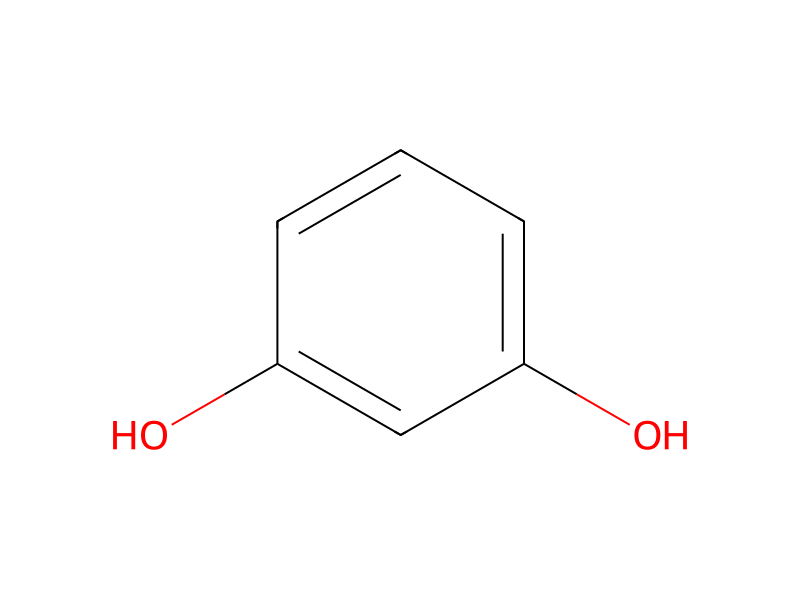
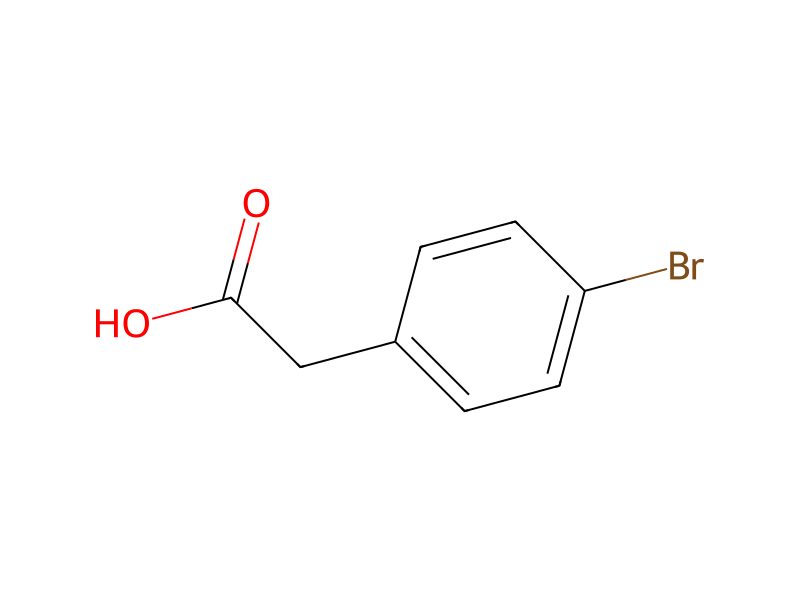
Resorcinol → 3-(4-bromophenyl)-7-hydroxy-4H-chromen-4-one
Reaction equation

[C:1]1([CH:8]=[CH:7][CH:6]=[C:4]([OH:5])[CH:3]=1)[OH:2].[Br:9][C:10]1[CH:15]=[CH:14][C:13]([CH2:16][C:17]([OH:19])=O)=[CH:12][CH:11]=1.P(Cl)(Cl)(Cl)(Cl)Cl.[CH3:26]N(C=O)C>>[Br:9][C:10]1[CH:11]=[CH:12][C:13]([C:16]2[C:17](=[O:19])[C:8]3[C:1](=[CH:3][C:4]([OH:5])=[CH:6][CH:7]=3)[O:2][CH:26]=2)=[CH:14][CH:15]=1Participants
5



Procedure
This compounds was synthesised in the same manner as described above. Resorcinol (0.66 g, 6 mmol), 4-bromophenylacetic acid (1.29 g, 6 mmol), BF3Et2O (4 ml), PCl5 (1.9 g, 9.1 mmol), DMF (5 ml and 10 ml). The precipitate formed was filtered and re-crystallized from methanol to give 3-(4-bromo-phenyl)-7-hydroxy-chromen-4-one as a white crystalline solid (1.1 g, 57.8%); Rf 0.85 ethyl acetate.
Workup
- customThis compounds was synthesised in the same manner
- customThe precipitate formed
- filtrationwas filtered
- customre-crystallized from methanol
Sources & evidence
- ORD record
- ord-c24f50033b8747fca908fe619d0210e1
- Source dataset
- uspto-grants-2007_07
- Patent number
- US07247734B2
Reaction notes
Loading…