Dichloromethane → HCID 86597178, compound
Reaction equation

Br[C:2]1[CH:3]=[C:4]([CH:7]=[CH:8][CH:9]=1)[CH:5]=[O:6].[OH:10][C:11]1[CH:12]=[C:13]([CH:18]=[CH:19][CH:20]=1)[C:14]([O:16][CH3:17])=[O:15].C(=O)([O-])[O-].[K+].[K+].C(Cl)Cl>N1C=CC=CC=1.[Cu]=O>[C:5](=[C:4]1[CH:3]=[CH:2][CH:9]=[C:8]([O:10][C:11]2[CH:12]=[C:13]([CH:18]=[CH:19][CH:20]=2)[C:14]([O:16][CH3:17])=[O:15])[CH2:7]1)=[O:6]Participants
7


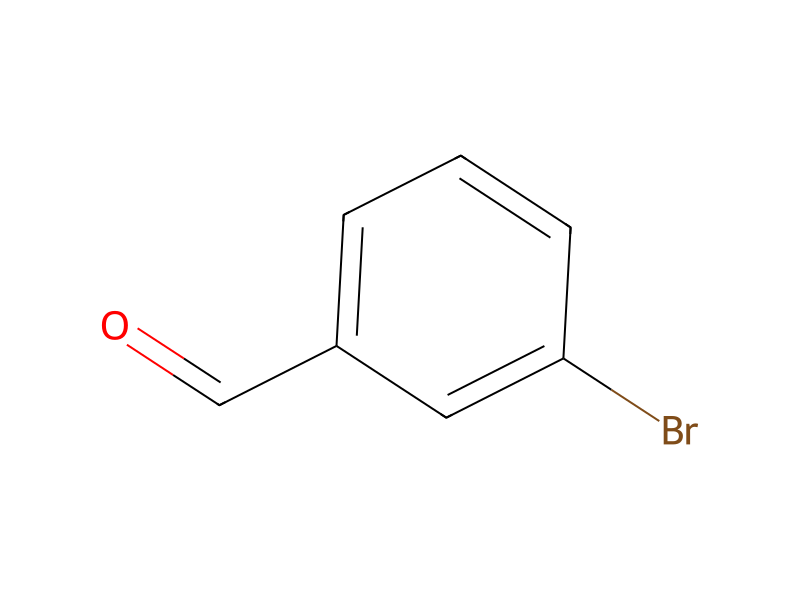



Procedure
A mixture of 3-bromobenzaldehyde (1.000 g; 5.4 mmol), methyl 3-hydroxybenzoate (987 mg; 6.5 mmol) and potassium carbonate (1.494 g; 10.8 mmol) in dry pyridine (8 mL) is stirred under argon at RT. Copper (II) oxide (860 mg; 10.8 mmol) is added and the reaction mixture is refluxed for 12 hours. After cooling to RT, CH2Cl2 (50 mL) is added and the mixture is filtered through celite. The filter cake is washed with fresh CH2Cl2 (50 mL). The combined organics are concentrated in vacuo. The residue is purified by flash chromatography (ethyl acetate/hexanes, 1:10 to 1:4) to yield methyl 3-(3-carbonylphenoxy)benzoate (776 mg; 56%) as a yellow oil.
Workup
- temperaturethe reaction mixture is refluxed for 12 hours
- temperatureAfter cooling to RT
- filtrationthe mixture is filtered through celite
- washThe filter cake is washed with fresh CH2Cl2 (50 mL)
- concentrationThe combined organics are concentrated in vacuo
- customThe residue is purified by flash chromatography (ethyl acetate/hexanes, 1:10 to 1:4)
Sources & evidence
- ORD record
- ord-4861224aa9da407eb08b624b041f7ea3
- Source dataset
- uspto-grants-2008_06
- Patent number
- US07381736B2
Reaction notes
Loading…