Ethyl Acetate → 5-Cyclopropyl-2-(5-fluoro-2-nitro-phenylamino)-benzonitrile
Reaction equation

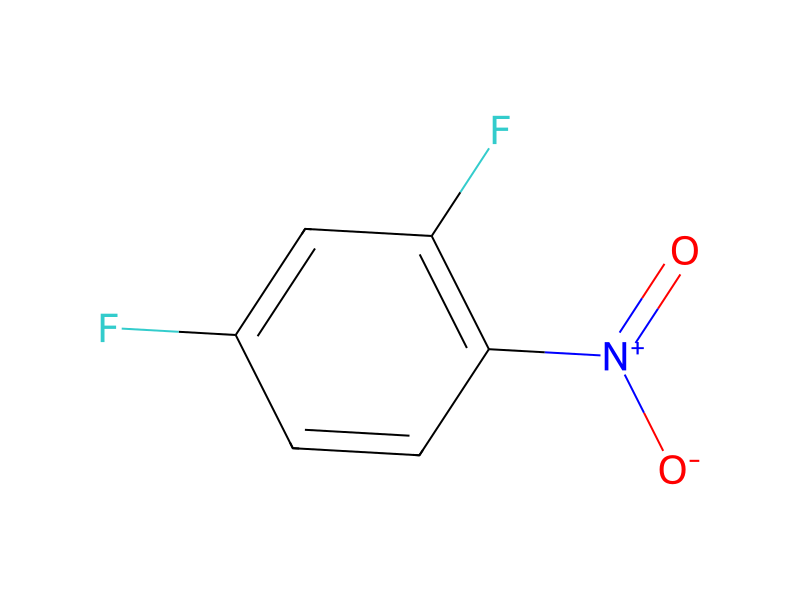
[NH2:1][C:2]1[CH:9]=[CH:8][C:7]([CH:10]2[CH2:12][CH2:11]2)=[CH:6][C:3]=1[C:4]#[N:5].F[C:14]1[CH:19]=[C:18]([F:20])[CH:17]=[CH:16][C:15]=1[N+:21]([O-:23])=[O:22].O.[OH-].[Li+].C(OCC)(=O)C>CS(C)=O>[CH:10]1([C:7]2[CH:8]=[CH:9][C:2]([NH:1][C:14]3[CH:19]=[C:18]([F:20])[CH:17]=[CH:16][C:15]=3[N+:21]([O-:23])=[O:22])=[C:3]([CH:6]=2)[C:4]#[N:5])[CH2:11][CH2:12]1Participants
6
Reactant 4



Product 1

Reagents, catalysts & solvents 1

Procedure
Heat a solution of 2-amino-5-cyclopropyl-benzonitrile (0.980 g, 6.16 mmol) with 2,4-difluoro-1-nitro-benzene (0.676 g, 6.16 mmol) and lithium hydroxide monohydrate (0.517 g, 12.33 mmol) in DMSO (12 ml) to 55° C. for 18 hours. Cool the reaction to ambient temperature and then add approximately 150 ml of ice water and stir the mixture for one hour. Precipitate the title compound and collect by filtration. Purify the solid via flash chromatography eluting with a linear gradient starting with 100% hexanes and going to 70% hexanes: 30% ethyl acetate to obtain 0.452 g (1.52 mmol, 25% yield) of the title compound as a yellow amorphous solid: Mass Spectrum (m/e): 298 (M+1).
Workup
- temperatureCool
- customthe reaction to ambient temperature
- customPrecipitate the title compound
- filtrationcollect by filtration
- customPurify the solid via flash chromatography
- washeluting with a linear gradient
Sources & evidence
- ORD record
- ord-ce15a0812ce44dff94aa943eae17c226
- Source dataset
- uspto-grants-2008_06
- Patent number
- US07384934B2
Reaction notes
Loading…