Sodium sulfate decahydrate → (S)-2-Phenethylpiperazine
Reaction equation

[CH2:1]([C@@H:9]1[NH:14][C:13](=O)[CH2:12][NH:11][C:10]1=O)[CH2:2][C:3]1[CH:8]=[CH:7][CH:6]=[CH:5][CH:4]=1.[H-].[Al+3].[Li+].[H-].[H-].[H-].O.O.O.O.O.O.O.O.O.O.S([O-])([O-])(=O)=O.[Na+].[Na+].[H][H]>C1COCC1>[CH2:1]([C@H:9]1[CH2:10][NH:11][CH2:12][CH2:13][NH:14]1)[CH2:2][C:3]1[CH:4]=[CH:5][CH:6]=[CH:7][CH:8]=1Participants
6
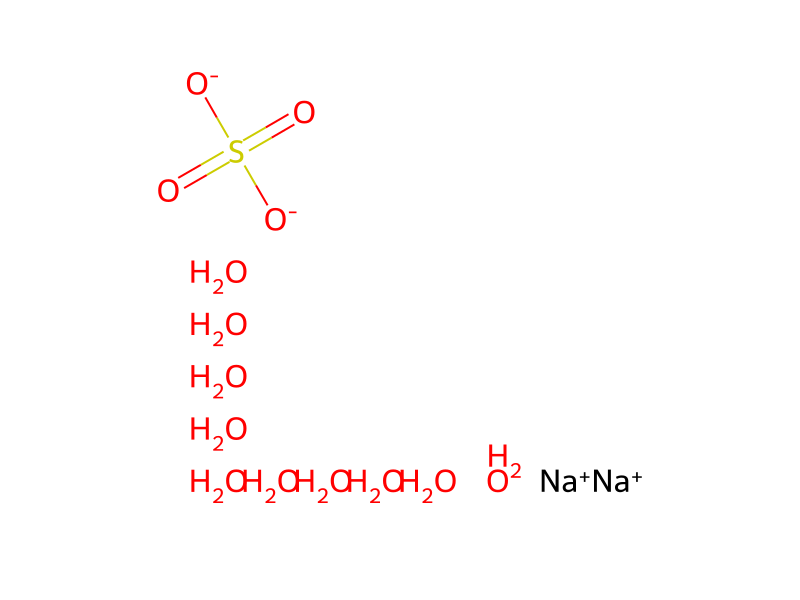





Conditions
- Temperature
- 0 °C
Procedure
Add 3-(S)-phenethyl-piperazine-2,5-dione (2.5 g, 11 mmol) portionwise to lithium aluminum hydride (1.75 g, 46 mmol) in THF (46 mL). Reflux the resulting suspension for an hour and cool to 0° C. Add sodium sulfate decahydrate carefully until hydrogen evolution ceases and stir the mixture for an additional three hours at room temperature and filter. Wash the solids with THF several times. Combine the filtrates, concentrate, and recrystallize the residue with THF/pentane to afford 2-(S)-phenethyl-piperazine as white crystals (1.9 g, 90%): mp 114–115° C.; 1H NMR (CDCl3): δ1.58–1,70 (m, 2H), 2.41 (dd, 1H), 2.58–3.02 (m, 8H), 7.16–7.30 (m, 5H); MS (APCI) m/z (rel intensity) 191 (100).
Workup
- temperatureReflux the resulting suspension for an hour
- filtrationfilter
- washWash the solids with THF several times
- concentrationCombine the filtrates, concentrate
- customrecrystallize the residue with THF/pentane
Sources & evidence
- ORD record
- ord-f8c5b92996a844679e249529204cfb48
- Source dataset
- uspto-grants-2007_05
- Patent number
- US07214673B2
Reaction notes
Loading…