Diisopropylethylamine → HCID 21101667, compound
Reaction equation

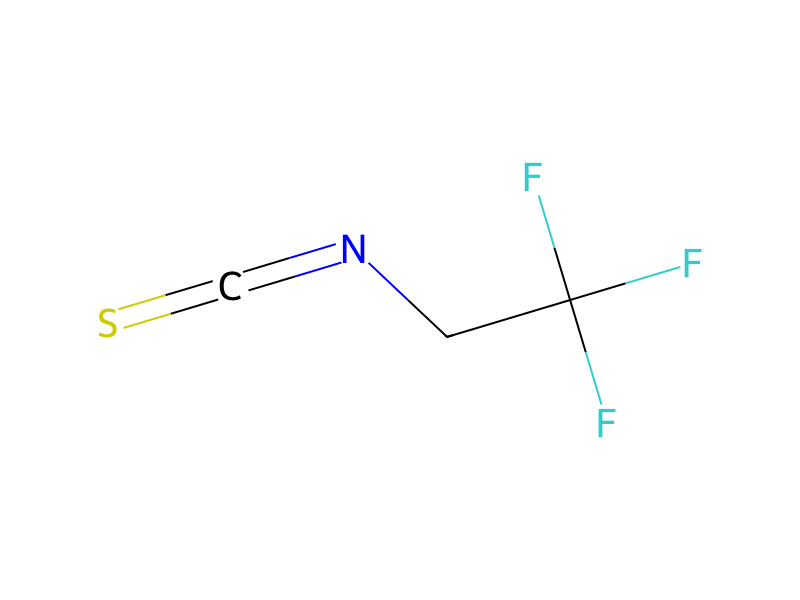
[Cl:1][C:2]1[CH:11]=[C:10]2[C:5]([C:6]([N:13]3[CH2:18][CH2:17][NH:16][CH2:15][CH2:14]3)=[CH:7][C:8]([NH2:12])=[N:9]2)=[CH:4][CH:3]=1.[F:19][C:20]([F:26])([F:25])[CH2:21][N:22]=[C:23]=[S:24].C(N(C(C)C)CC)(C)C>>[NH2:12][C:8]1[CH:7]=[C:6]([N:13]2[CH2:18][CH2:17][N:16]([C:23](=[S:24])[NH:22][CH2:21][C:20]([F:26])([F:25])[F:19])[CH2:15][CH2:14]2)[C:5]2[C:10](=[CH:11][C:2]([Cl:1])=[CH:3][CH:4]=2)[N:9]=1Participants
4



Procedure
As described for example 159, 7-chloro-4-(1-piperazinyl)-2-quinolinamine, 1,1,1-trifluoro-2-isothiocyanato-ethane, and diisopropylethyl amine, are reacted to give the product. LC-MS: 466 (M++1). 1H NMR (DMSO-TFA-d6) δ 1.0–1.3 (m, 1H), 3.0–3.14 (d, 1H), 3.18–3.38 (m, 6), 3.38–3.7 (m, 7H), 4.6–4.8 (m, 1H), 6.2–6.4 (s, 1H), 6.7–7.0 (m, 1H), 7.28–7.44 (m, 1H), 7.6–7.7 (s, 1H), 7.8–8.0 (m, 1H), 8.1–8.2 (m, 1H).
Workup
- customare reacted
- customto give the product
Sources & evidence
- ORD record
- ord-a65ee45b2d8942dbad4e4dd5432d62aa
- Source dataset
- uspto-grants-2007_05
- Patent number
- US07220856B2
Reaction notes
Loading…