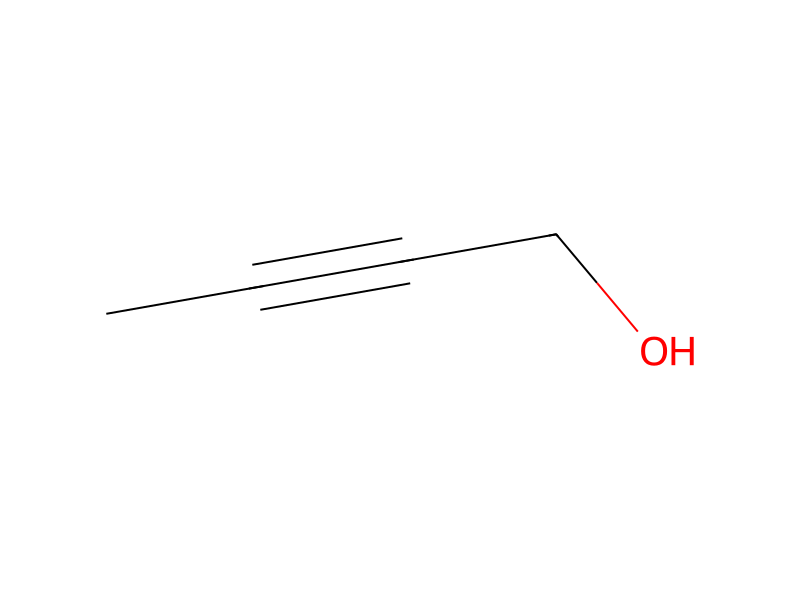
2-Butyn-1-ol → HCID 17979089, compound
Reaction equation

[H-].[Na+].[CH2:3]([OH:7])[C:4]#[C:5][CH3:6].Cl[C:9]1[CH:14]=[C:13]([O:15][CH2:16][C:17]([CH3:21])([CH3:20])[CH2:18][Br:19])[N:12]=[CH:11][N:10]=1.[Cl-].[NH4+]>O1CCCC1>[CH2:3]([O:7][C:9]1[CH:14]=[C:13]([O:15][CH2:16][C:17]([CH3:21])([CH3:20])[CH2:18][Br:19])[N:12]=[CH:11][N:10]=1)[C:4]#[C:5][CH3:6]Participants
Reactant 4



Product 1

Reagents, catalysts & solvents 1

Procedure
In 4 ml of tetrahydrofuran was suspended 0.11 g of sodium hydride (60% in oil), to which 0.5 ml of a solution containing 0.16 g of 2-butyn-1-ol in tetrahydrofuran was added dropwise at room temperature, followed by stirring for 10 minutes. To this was added dropwise 0.5 ml of a solution containing 0.56 g of 4-chloro-6-(3-bromo-2,2-dimethylpropyloxy)pyrimidine in tetrahydrofuran at 0° C., followed by stirring at the same temperature for 4 hours. The reaction mixture was then poured into a saturated aqueous ammonium chloride solution, which was extracted three times with t-butyl methyl ether. The combined organic layers were washed with a saturated aqueous sodium chloride solution, dried over anhydrous magnesium sulfate, and then concentrated. The residue was subjected to silica gel column chromatography to give 0.54 g of 4-(2-butynyloxy)-6-(3-bromo-2,2-dimethylpropyloxy)pyrimidine (the present compound (13)).
Workup
- additionwas added dropwise at room temperature
- stirringby stirring at the same temperature for 4 hours
- extractionwas extracted three times with t-butyl methyl ether
- washThe combined organic layers were washed with a saturated aqueous sodium chloride solution
- dry with materialdried over anhydrous magnesium sulfate
- concentrationconcentrated
Sources & evidence
- ORD record
- ord-620440a6b9fd4cddafc18d5f4d3f839a
- Source dataset
- uspto-grants-2007_05
- Patent number
- US07223769B2
Reaction notes
Loading…