Oxygen → HCID 18182999, compound
Reaction equation

[C:1]([NH2:5])(=[O:4])[CH:2]=[CH2:3].C([O-])(=O)C(C)=C.[C:12]([O:17][CH2:18][CH:19]1[O:21][CH2:20]1)(=[O:16])[C:13]([CH3:15])=[CH2:14].CC(N=NC(C#N)(C)C)(C#N)C.O=O>O1CCCC1>[C:1]([NH2:5])(=[O:4])[CH:2]=[CH2:3].[C:12]([O:17][CH2:18][CH:19]1[O:21][CH2:20]1)(=[O:16])[C:13]([CH3:15])=[CH2:14]Participants
Reactant 5



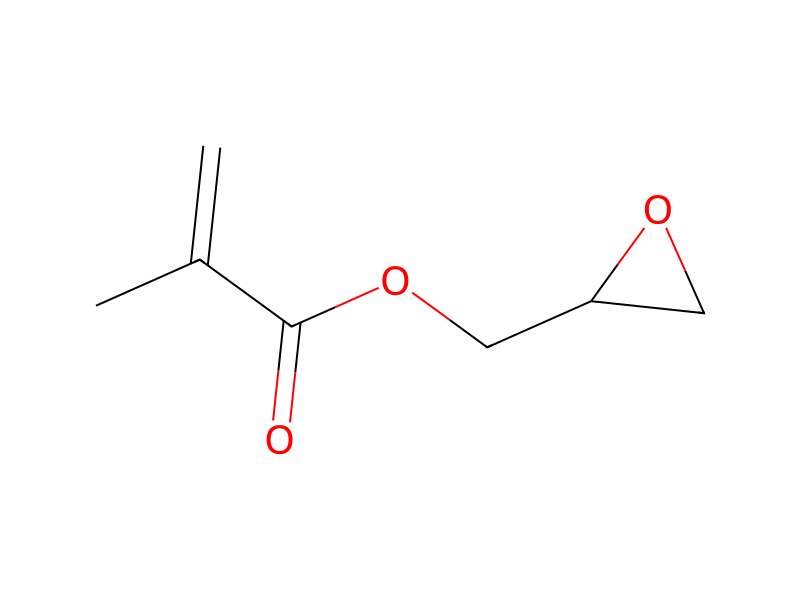

Product 1

Reagents, catalysts & solvents 1

Procedure
The copolymerization of acrylamide with gylcidyl methacrylate was carried out in solution. In a 100 milliliter (ml) round bottom flask, 6 grams of acrylamide, 4 grams of glycidyl methacrylate and 90 milligrams of azobisisobutylonitrile (AIBN) were added. 50 milliliters of tetrahydrofuran (THF) was added to the flask as a solvent. Nitrogen was introduced into the flask to replace the oxygen for about 45 minutes. The flask was then placed in an oil bath at a temperature of about 55° C. with stirring. Copolymerization was performed for about 3 hours under nitrogen atmosphere. The resulting solid copolymer of acrylamide and glycidyl methacrylate was filtered and washed with acetone to remove the unreacted monomers and the solvent. The copolymer was then dried overnight in an oven at room temperature under vacuum.
Workup
- additionNitrogen was introduced into the flask
- customfor about 45 minutes
- customThe flask was then placed in an oil bath at a temperature of about 55° C.
- customCopolymerization
- filtrationThe resulting solid copolymer of acrylamide and glycidyl methacrylate was filtered
- washwashed with acetone
- customto remove the unreacted monomers
- customThe copolymer was then dried overnight in an oven at room temperature under vacuum
Sources & evidence
- ORD record
- ord-4cdc6308e50f4b4ba9a7e3144f109bca
- Source dataset
- uspto-grants-2003_07
- Patent number
- US06599987B1
Reaction notes
Loading…