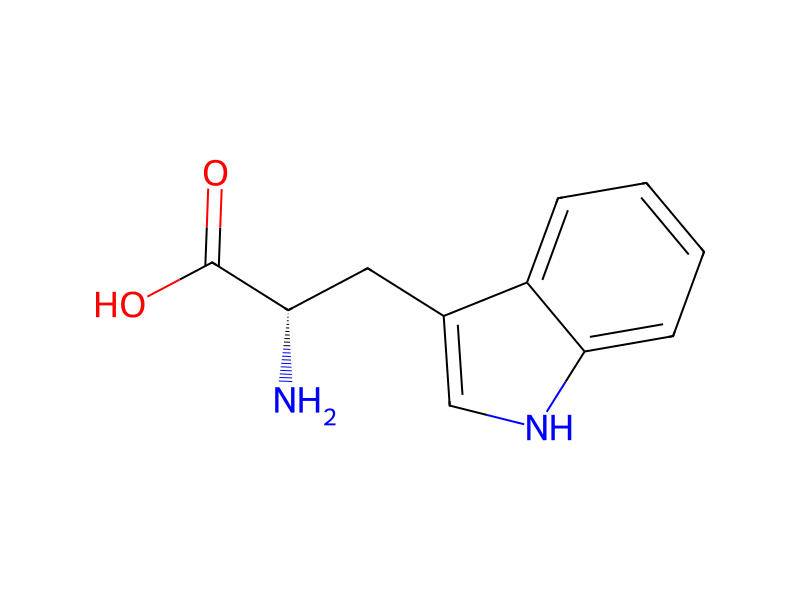
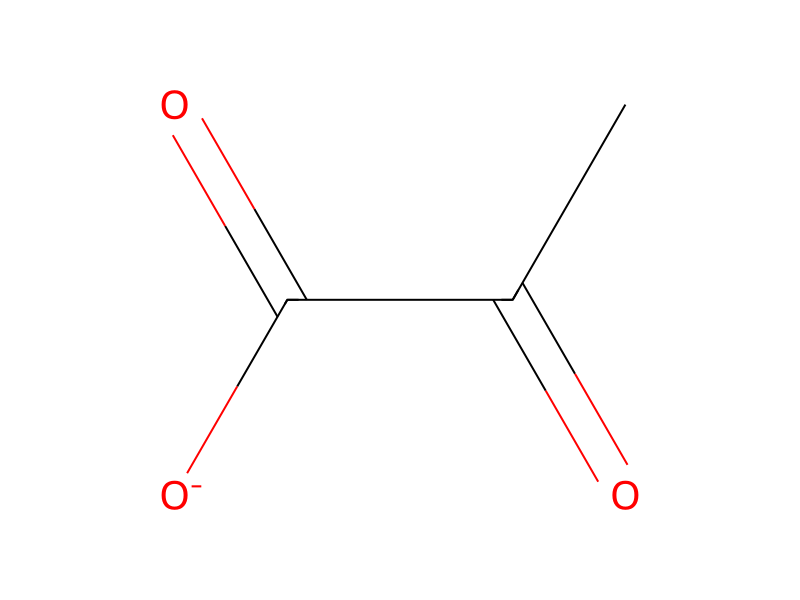
L-Tryptophan → D-Alanine
Reaction equation

N[C@H:2]([C:13]([OH:15])=[O:14])[CH2:3][C:4]1[C:12]2[C:7](=[CH:8][CH:9]=[CH:10][CH:11]=2)[NH:6][CH:5]=1.[NH2:16][C@@H:17]([C:28]([OH:30])=[O:29])[CH2:18]C1C2C(=CC=CC=2)NC=1.C([O-])(=O)C(C)=O>>[NH:6]1[C:7]2[C:12](=[CH:11][CH:10]=[CH:9][CH:8]=2)[C:4]([CH2:3][C:2](=[O:29])[C:13]([O-:15])=[O:14])=[CH:5]1.[NH2:16][C@@H:17]([C:28]([OH:30])=[O:29])[CH3:18]Participants
5



Procedure
In a specific embodiment, L-tryptophan is converted to D-tryptophan using a tryptophan racemase. D-tryptophan then reacts with pyruvate via a broad specificity D-aminotransferase to produce indole-3-pyruvate and D-alanine. Indole-3-pyruvate then reacts with an R-specific aldolase and pyruvate to form R-α-keto acid monatin (R-MP). R-MP then reacts with a broad specificity D-aminotransferase and D-alanine to produce R,R monatin and pyruvate.
Sources & evidence
- ORD record
- ord-b67ca4c44e1647458efeb30008d43f0c
- Source dataset
- uspto-grants-2011_02
- Patent number
- US07888081B2
Reaction notes
Loading…