Indole → HCID 53783081, compound
Reaction equation

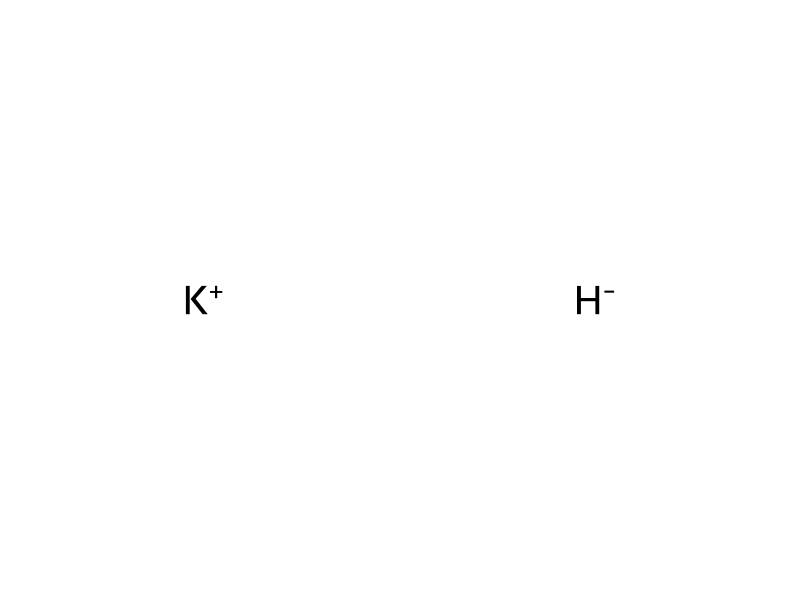
[H-].[K+].Br[C:4]1[CH:5]=[C:6]2[C:10](=[CH:11][CH:12]=1)[NH:9][CH:8]=[CH:7]2.C([Li])(C)(C)C.N1C2C(=CC=CC=2)C=C1.CON(C)[C:30]([CH:32]([NH:41][C:42]([CH:44]([NH:49][C:50](=[O:59])[O:51][CH2:52][C:53]1[CH:58]=[CH:57][CH:56]=[CH:55][CH:54]=1)[CH2:45][CH:46]([CH3:48])[CH3:47])=[O:43])[CH2:33][CH2:34][C:35]1[CH:40]=[CH:39][CH:38]=[CH:37][CH:36]=1)=[O:31].P(=O)(O)(O)O>CCOCC>[NH:9]1[C:10]2[C:6](=[CH:5][CH:4]=[CH:12][CH:11]=2)[CH:7]=[C:8]1[C:30]([CH:32]([NH:41][C:42]([CH:44]([NH:49][C:50](=[O:59])[O:51][CH2:52][C:53]1[CH:54]=[CH:55][CH:56]=[CH:57][CH:58]=1)[CH2:45][CH:46]([CH3:48])[CH3:47])=[O:43])[CH2:33][CH2:34][C:35]1[CH:40]=[CH:39][CH:38]=[CH:37][CH:36]=1)=[O:31]Participants






Conditions
- Temperature
- 0 °C
Procedure
A mixture comprised of potassium hydride (0.29 g, 2.56 mmol, 67% in mineral oil) in anhydrous ether (5 mL) was cooled to 0° C. and then a solution comprised of 5-bromo-1H-indole (0.5 g, 2.56 mmol) in anhydrous ether (5 ml) was added. The mixture was stirred for 15 minutes and then cooled to −78° C. under nitrogen. A solution comprised of tert-butyllithium (3 mL in pentane, 5.08 mmol) in anhydrous ether (5 mL) was cooled to −78° C. and added to the indole mixture over 2 minutes. The mixture was stirred for 10 minutes and then a solution comprised of benzyl 1-[1-(N-methoxy-N-methylcarbamoyl)-3-phenylpropylcarbamoyl]-3-methylbutylcarbamate (0.3 g, 0.64 mM) in ether (10 mL) was added. The mixture was allowed to warm to room temperature and then poured into a cold solution at 0° C. of phosphoric acid (25 mL, 1 M in water). The aqueous layer was separated and extracted with ethyl acetate (25 mL). The organic layers were combined and washed with saturated sodium bicarbonate (25 mL), dried (MgSO4) and concentrated. The product was purified from the residue by flash chromatography on silica gel eluting with 1:2 ethyl acetate/hexanes to provide benzyl 1-[1-(1H-indol-2-ylcarbonyl)-3-phenylpropylcarbamoyl]-3-methylbutylcarbamate (112 mg, 0.21 mmol) as a white solid. MS (ESI) m/z=526(M+1); 1H NMR (CDCl3): δ 0.8-1.05 (d, J=4 Hz, 6H), 1.5 (s, 1H), δ 1.5-1.78 (m, 3H), δ 2.00 (m, 1H), δ 2.4 (m, 1H), δ 2.65 (m, 2H), δ 4.35 (m, 1H), δ 5.17 (s, 2H), δ 5.25 (d,J=6 Hz 1H), δ 5.75 (m, 1H), δ 6.55 (s, 1H) 7.05 (d, J=4 Hz, 1H), δ 7.1-7.45 (m, 10H) 7.7(d, J=4 Hz, 1H), δ 8.15 (d, J=4 Hz, 1H) 8.78 (m, 1H). (C32H35N3O4).
Workup
- additionwas added
- temperaturecooled to −78° C. under nitrogen
- temperaturewas cooled to −78° C.
- stirringThe mixture was stirred for 10 minutes
- additionwas added
- temperatureto warm to room temperature
- customThe aqueous layer was separated
- extractionextracted with ethyl acetate (25 mL)
- washwashed with saturated sodium bicarbonate (25 mL)
- dry with materialdried (MgSO4)
- concentrationconcentrated
- customThe product was purified from the residue by flash chromatography on silica gel eluting with 1:2 ethyl acetate/hexanes
Sources & evidence
- ORD record
- ord-e99496c257ce49f99e7519668a2bd56c
- Source dataset
- uspto-grants-2003_06
- Patent number
- US06576630B1
Reaction notes
Loading…