18-Crown-6 → 3-(1,3-Dioxolan-2-YL)benzophenone
Reaction equation

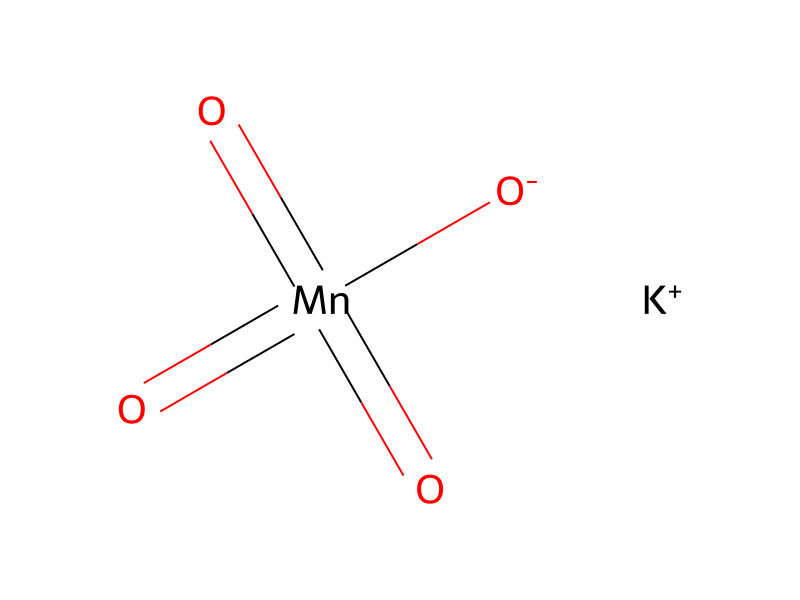
[O:1]1[CH2:5][CH2:4][O:3][CH:2]1[C:6]1[CH:7]=[C:8]([CH:12]([C:14]2[CH:19]=[CH:18][CH:17]=[CH:16][CH:15]=2)[OH:13])[CH:9]=[CH:10][CH:11]=1.C1OCCOCCOCCOCCOCCOC1.[Mn]([O-])(=O)(=O)=O.[K+].S([O-])(O)=O.[Na+]>ClCCl.O>[O:1]1[CH2:5][CH2:4][O:3][CH:2]1[C:6]1[CH:7]=[C:8]([C:12]([C:14]2[CH:15]=[CH:16][CH:17]=[CH:18][CH:19]=2)=[O:13])[CH:9]=[CH:10][CH:11]=1Participants
7






Conditions
- Temperature
- 40 °C
Procedure
Combine (3-[1,3]dioxolan-2-ylphenyl)-phenyl-methanol (5.0 g, 18.5 mmol) and 18-crown-6 (160 mg, 0.6 mmol) in dichloromethane. Add potassium permanganate (8.8 g, 55.5 mmol). Heat to about 40° C. After 4 hours, cool to room temperature add water and sodium hydrogensulfite (6.0 g). Basify with a solution of 1N sodium hydroxide (about 60 ml) and extract with dichloromethane. Combine the organic layers and wash sequentially with distilled water and brine and then dry (Na2SO4), filter, and concentrate to give a residue. Chromatograph the residue eluting with EtOAc to give the title compound.
Workup
- temperaturecool to room temperature
- extractionBasify with a solution of 1N sodium hydroxide (about 60 ml) and extract with dichloromethane
- washwash sequentially with distilled water and brine
- dry with materialdry (Na2SO4)
- filtrationfilter
- concentrationconcentrate
- customto give a residue
- washChromatograph the residue eluting with EtOAc
Sources & evidence
- ORD record
- ord-6c79f5254bbc4c398986d677420a22b0
- Source dataset
- uspto-grants-2007_01
- Patent number
- US07157488B2
Reaction notes
Loading…