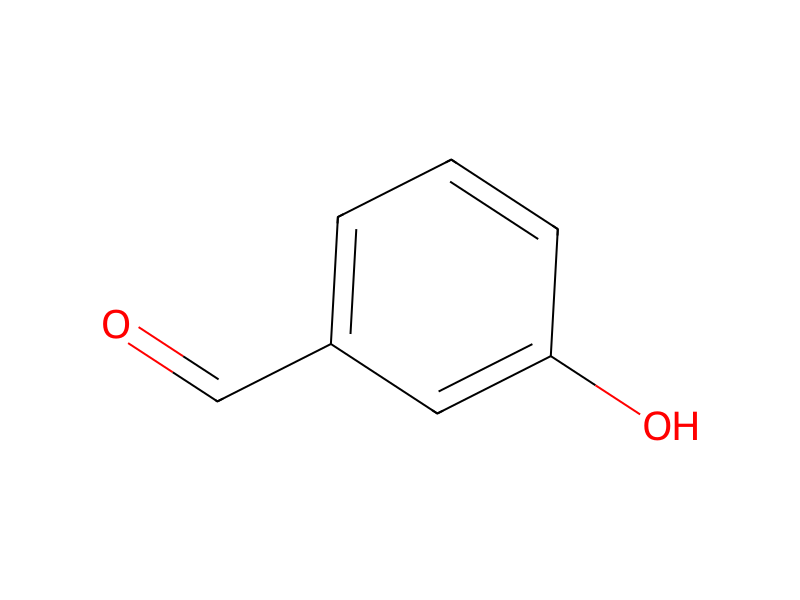
3-Hydroxybenzaldehyde → HCID 15058630, compound
Reaction equation

Br[CH2:2][CH2:3][F:4].[OH:5][C:6]1[CH:7]=[C:8]([CH:11]=[CH:12][CH:13]=1)[CH:9]=[O:10].C([O-])([O-])=O.[K+].[K+]>CC(=O)CC>[F:4][CH2:3][CH2:2][O:5][C:6]1[CH:7]=[C:8]([CH:11]=[CH:12][CH:13]=1)[CH:9]=[O:10]Participants
5
Reactant 3


Product 1

Reagents, catalysts & solvents 1

Procedure
Combine 1-bromo-2-fluoroethane (4.575 g; 36.0 mmol), 3-hydroxybenzaldehyde (4.103 gm; 33.60 mmol), and K2CO3 (7.05 gm; 51.0 mmol) in 2-butanone (100 mL) and reflux. After 18 hour cool the mixture to ambient temperature, concentrate, and partition between 100 mL of water and 100 mL of dichloromethane. Separate the layers and extract the aqueous layer with dichloromethane (2×75 mL). Combine the organic layers and wash sequentially with brine (2×150 mL), 1 M NaOH (2×100 mL), NaHCO3 (saturated, 100 mL), and brine (150 mL), dried (MgSO4), concentrate, and chromatograph on silica gel (0–25% diethyl ether in hexanes) to give the title compound.
Workup
- concentrationconcentrate
- custompartition between 100 mL of water and 100 mL of dichloromethane
- customSeparate the layers
- extractionextract the aqueous layer with dichloromethane (2×75 mL)
- washCombine the organic layers and wash sequentially with brine (2×150 mL), 1 M NaOH (2×100 mL), NaHCO3 (saturated, 100 mL), and brine (150 mL)
- dry with materialdried (MgSO4)
- concentrationconcentrate
Sources & evidence
- ORD record
- ord-04acda6cf37743dbab01895e1cc51733
- Source dataset
- uspto-grants-2007_01
- Patent number
- US07157488B2
Reaction notes
Loading…