Pyridine → Ethyl 3-chloro-4-(1-indolinylcarbonylamino)phenylacetate
Reaction equation

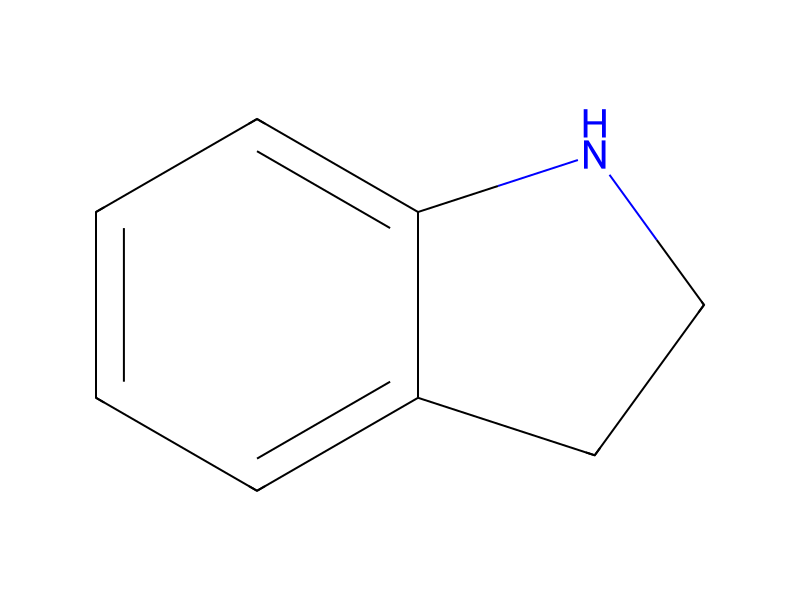
ClC(Cl)(O[C:5](=[O:11])OC(Cl)(Cl)Cl)Cl.N1C=CC=CC=1.[NH2:19][C:20]1[CH:25]=[CH:24][C:23]([CH2:26][C:27]([O:29][CH2:30][CH3:31])=[O:28])=[CH:22][C:21]=1[Cl:32].[NH:33]1[C:41]2[C:36](=[CH:37][CH:38]=[CH:39][CH:40]=2)[CH2:35][CH2:34]1>C(Cl)Cl.O>[Cl:32][C:21]1[CH:22]=[C:23]([CH2:26][C:27]([O:29][CH2:30][CH3:31])=[O:28])[CH:24]=[CH:25][C:20]=1[NH:19][C:5]([N:33]1[C:41]2[C:36](=[CH:37][CH:38]=[CH:39][CH:40]=2)[CH2:35][CH2:34]1)=[O:11]Participants
7
Reactant 4



Product 1

Reagents, catalysts & solvents 2


Conditions
- Temperature
- 0 °C
Procedure
In methylene chloride (50 ml), triphosgene (926 mg, 3.12 mmol) and then pyridine (5 ml) were added to ethyl 4-amino-3-chlorophenylacetate (2.00 g, 9.36 mmol) under stirring at 0° C. After stirring at the same temperature for 15 minutes, indoline (1.05 ml, 9.36 mmol) was added. The reaction mixture was further stirred for 15 minutes at room temperature. Water (50 ml) was added to the reaction mixture, followed by extraction with ethyl acetate (300 ml). The extract was washed with saturated brine, dried over anhydrous magnesium sulfate and distilled under reduced pressure to remove the solvent, whereby ethyl 3-chloro-4-(1-indolinylcarbonylamino)phenylacetate (3.07 g, 91%) was obtained as a pale pink crystalline powder.
Workup
- stirringAfter stirring at the same temperature for 15 minutes
- stirringThe reaction mixture was further stirred for 15 minutes at room temperature
- extractionfollowed by extraction with ethyl acetate (300 ml)
- washThe extract was washed with saturated brine
- dry with materialdried over anhydrous magnesium sulfate
- distillationdistilled under reduced pressure
- customto remove the solvent
Sources & evidence
- ORD record
- ord-c43f230416f64fb091f51102625deac3
- Source dataset
- uspto-grants-2007_01
- Patent number
- US07157487B2
Reaction notes
Loading…