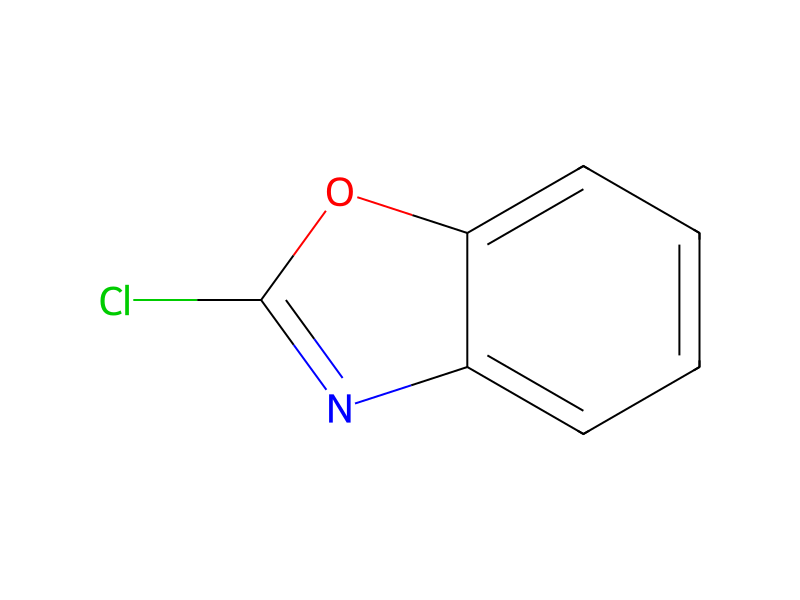
2-Chlorobenzoxazole → HCID 58778646, compound
Reaction equation

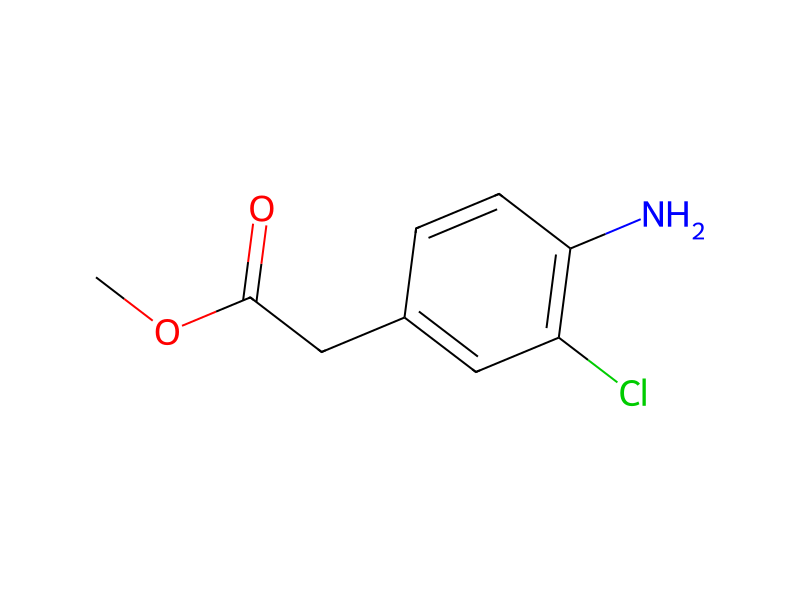
Cl[C:2]1O[C:4]2[CH:10]=[CH:9][CH:8]=[CH:7][C:5]=2[N:6]=1.[NH2:11][C:12]1[CH:17]=[CH:16][C:15]([CH2:18][C:19]([O:21][CH3:22])=[O:20])=[CH:14][C:13]=1[Cl:23].[NH+]1C=CC=CC=1.CC1C=CC([S:37](O)(=O)=O)=CC=1>C1(C)C(C)=CC=CC=1>[S:37]1[C:4]2[CH:10]=[CH:9][CH:8]=[CH:7][C:5]=2[N:6]=[C:2]1[NH:11][C:12]1[CH:17]=[CH:16][C:15]([CH2:18][C:19]([O:21][CH3:22])=[O:20])=[CH:14][C:13]=1[Cl:23]Participants
5
Reactant 3

Product 1

Reagents, catalysts & solvents 1

Procedure
A mixture of 2-chlorobenzoxazole (489 mg, 2.88 mmol) and methyl 4-amino-3-chlorophenylacetate (567 mg, 2.84 mmol) and pyridinium•p-toluenesulfonate (pyridinium•p-toluenesulfonate (PPTS)) (214 mg, 0.85 mmol) was heated under reflux for 3 hours in xylene (10 ml). After the reaction mixture was cooled to room temperature, the solvent was distilled off under reduced pressure. The residue was purified by chromatography on a silica gel column, whereby from n-hexane/ethyl acetate (7:1, v/v) eluate fractions, methyl (4-(2-benzothiazolyl)amino-3-chlorophenyl)acetate (296 mg, 32%) was obtained as a white solid.
Workup
- temperaturewas heated
- distillationthe solvent was distilled off under reduced pressure
- customThe residue was purified by chromatography on a silica gel column, whereby from n-hexane/ethyl acetate (7:1
Sources & evidence
- ORD record
- ord-0238f2e612d34058af908e01b22e686f
- Source dataset
- uspto-grants-2007_01
- Patent number
- US07157487B2
Reaction notes
Loading…