Triethylamine → 5-bromo-3-fluoro-N-methoxy-N-methylpyridine-2-carboxamide
Reaction equation

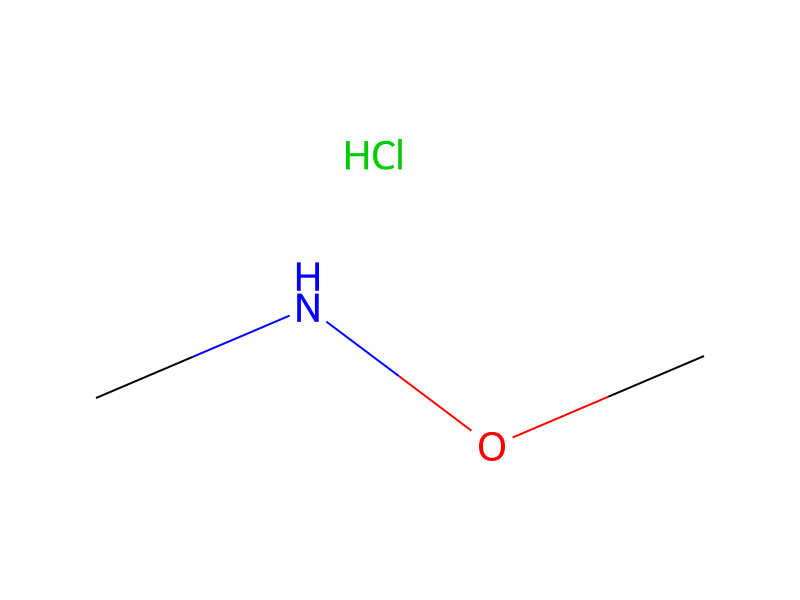
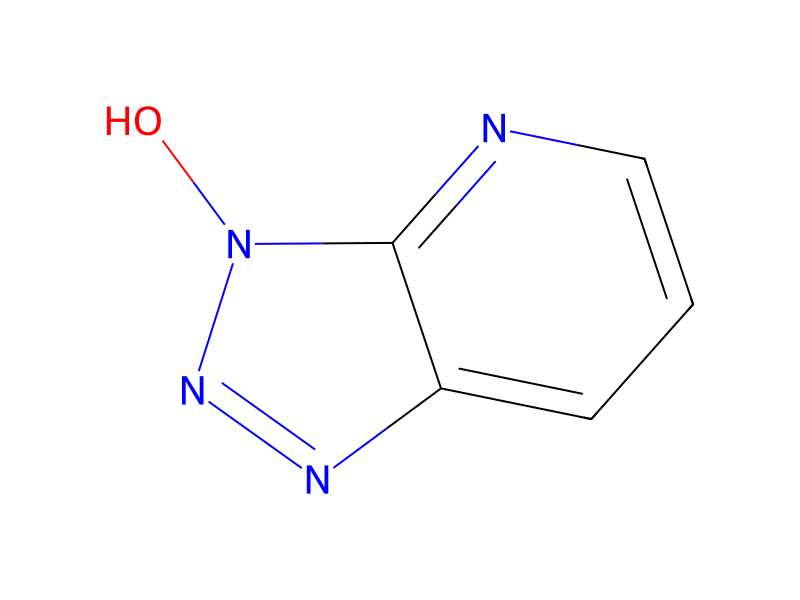
[Br:1][C:2]1[CH:3]=[C:4]([F:11])[C:5]([C:8](O)=[O:9])=[N:6][CH:7]=1.Cl.[CH3:13][O:14][NH:15][CH3:16].ON1C2N=CC=CC=2N=N1.C(N(CC)CC)C>CN(C=O)C>[Br:1][C:2]1[CH:3]=[C:4]([F:11])[C:5]([C:8]([N:15]([O:14][CH3:13])[CH3:16])=[O:9])=[N:6][CH:7]=1Participants
Reactant 4


Product 1

Reagents, catalysts & solvents 1

Procedure
A solution of crude 5-bromo-3-fluoropyridine-2-carboxylic acid (40.65 g, 184.8 mmol), O,N-dimethylhydroxylamine hydrochloride (21.63 g, 221.7 mmol), 1-ethyl-(3-dimethyl-aminopropyl)-carbodiimide hydrochloride (70.85 g, 369.6 mmol), 1-hydroxy-7-azabenzotriazole (2.497 g, 18.48 mmol), and triethylamine (16.48 mL, 118.3 mmol) in 200 mL DMF was stirred at room temperature overnight. The solution was partially concentrated in vacuo and partitioned between ethyl acetate and 10% aqueous sodium bicarbonate. The aqueous layer was extracted 4× with ethyl acetate, and the combined organics were washed with water and brine, dried over Na2SO4, filtered and concentrated under vacuum to provide 5-bromo-3-fluoro-N-methoxy-N-methylpyridine-2-carboxamide that gave proton NMR spectra consistent with theory and a mass ion (ES+) of 263.01 for M+H+(79Br).
Workup
- concentrationThe solution was partially concentrated in vacuo
- custompartitioned between ethyl acetate and 10% aqueous sodium bicarbonate
- extractionThe aqueous layer was extracted 4× with ethyl acetate
- washthe combined organics were washed with water and brine
- dry with materialdried over Na2SO4
- filtrationfiltered
- concentrationconcentrated under vacuum
Sources & evidence
- ORD record
- ord-1c16b7dd319748288a7b04a8f4712977
- Source dataset
- uspto-grants-2007_01
- Patent number
- US07163951B2
Reaction notes
Loading…