Boc-L-Valine → Tert-butoxycarbonylalanine
Reaction equation

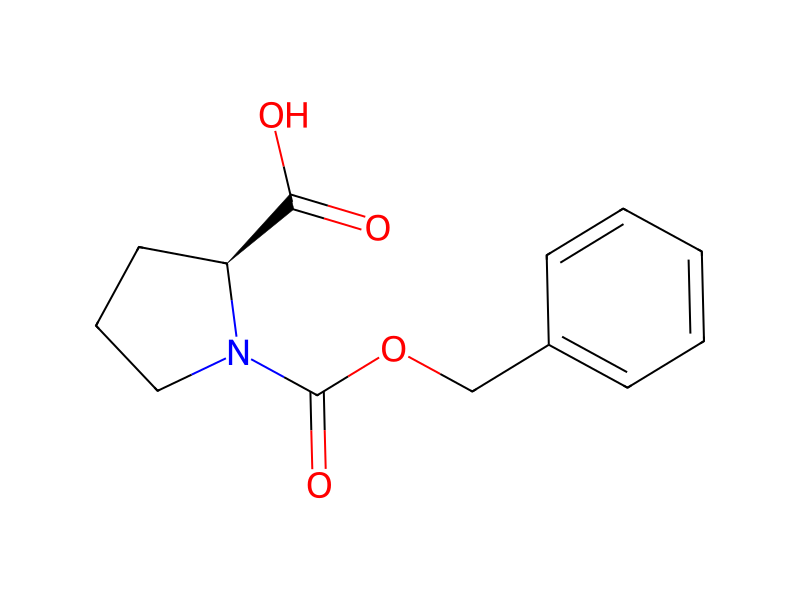
C[CH:2]([C@H:4]([NH:8][C:9]([O:11][C:12]([CH3:15])([CH3:14])[CH3:13])=[O:10])[C:5]([OH:7])=[O:6])C.C(N1CCC[C@H]1C(O)=O)(OCC1C=CC=CC=1)=O>CCO.[Pd]>[CH3:2][C@H:4]([NH:8][C:9]([O:11][C:12]([CH3:13])([CH3:15])[CH3:14])=[O:10])[C:5]([OH:7])=[O:6]Participants
5
Reactant 2

Product 1

Reagents, catalysts & solvents 2


Procedure
Substantially the same procedure as described above was repeated except that N-t-BOC-L-valine (→P8) was used in place of the L-phenylalanine derivative. When N-CBZ-L-proline was used as starting material the deprotection was done by overnight hydrogenation with H2, 10% Pd/C in EtOH (→P9). In case of N-t-BOC-L-alanine the free amine was obtained after evaporation of the solvents and stirring the residue with saturated NaHCO3 solution (→P10).
Sources & evidence
- ORD record
- ord-d2561befc9224a639fd648a954bf6c19
- Source dataset
- uspto-grants-1997_09
- Patent number
- US05663174
Reaction notes
Loading…