Sodium Formate → HCID 21835981, compound
Reaction equation

[CH2:1]([Si:4]([CH2:12][CH:13]=[CH2:14])([CH2:9][CH:10]=[CH2:11])[CH2:5][CH2:6][CH2:7]Br)[CH:2]=[CH2:3].C([O-])=[O:16].[Na+]>[Br-].C([N+](CCCC)(CCCC)CCCC)CCC>[CH2:1]([Si:4]([CH2:12][CH:13]=[CH2:14])([CH2:9][CH:10]=[CH2:11])[CH2:5][CH2:6][CH2:7][OH:16])[CH:2]=[CH2:3]Participants
Reactant 2
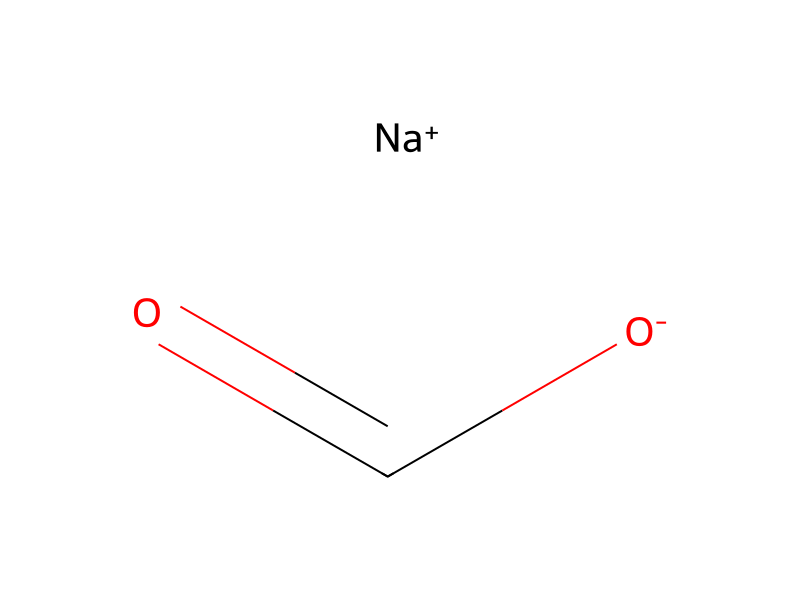

Product 1

Reagents, catalysts & solvents 1

Procedure
Triallyl(3-hydroxylpropyl)silane was prepared from triallyl-3-bromopropyl silane prepared in Example 7 via the formyloxypropyl intermediate. A 100 ml flask equipped with stir bar and reflux condenser was charged with 10.0 grams (36 millimoles) of triallyl 3-bromopropyl silane (prepared as described in Example 7), 4.90 grams (72 millimoles) sodium formate (commercially available from Aldrich Chemical Co. of Milwaukee, Wis.) and 0.60 grams of tetrabutyl ammonium bromide (commercially available from Aldrich Chemical Co.). The suspension was stirred at 110° C. for two days. The solution was then filtered and combined with equal volumes of deionized water and cyclohexane (commercially available as Omnisolve from E. Merck of Gibbstown, N.J.). The organic extract was flash chromatographed on silica using first cyclohexane, followed by 80/20 cyclohexane/acetone to collect the triallyl formyloxypropyl silane intermediate.
Workup
- customA 100 ml flask equipped
- temperaturereflux condenser
- stirringThe suspension was stirred at 110° C. for two days
- filtrationThe solution was then filtered
- extractionThe organic extract
- customchromatographed on silica using first cyclohexane
- customto collect the triallyl formyloxypropyl silane intermediate
Sources & evidence
- ORD record
- ord-5794f9172f2c43dfb0fab286220c24d1
- Source dataset
- uspto-grants-1997_09
- Patent number
- US05667674
Reaction notes
Loading…