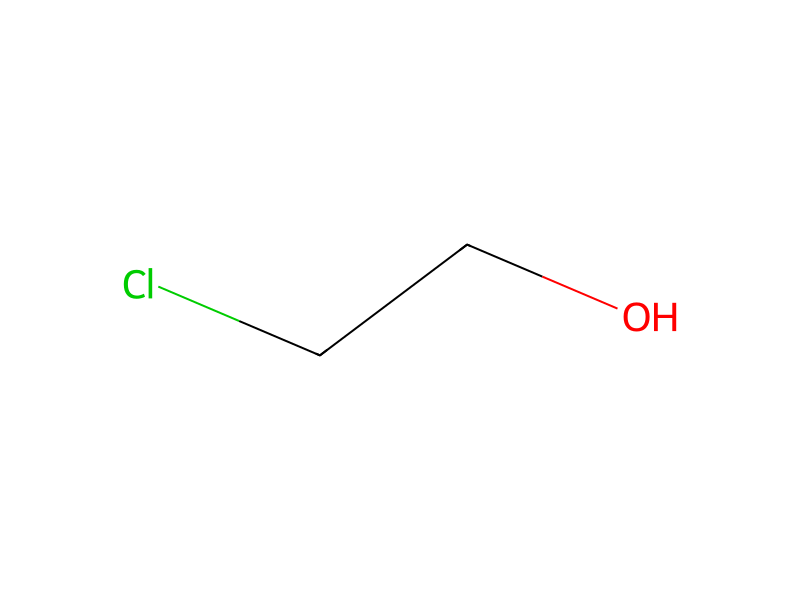
2-Chloroethanol → 2-chloroethoxy-2-methyl-2H-indazole-3-sulfonamide
Reaction equation

CCOC(/N=N/C(OCC)=O)=O.[OH:13][C:14]1[C:15]2[C:19]([CH:20]=[CH:21][CH:22]=1)=[N:18][N:17]([CH3:23])[C:16]=2[S:24]([NH2:27])(=[O:26])=[O:25].[Cl:28][CH2:29][CH2:30]O.C1(P(C2C=CC=CC=2)C2C=CC=CC=2)C=CC=CC=1>C1COCC1.O>[Cl:28][CH2:29][CH2:30][O:13][C:14]1[C:15]2[C:19]([CH:20]=[CH:21][CH:22]=1)=[N:18][N:17]([CH3:23])[C:16]=2[S:24]([NH2:27])(=[O:26])=[O:25]Participants
7






Procedure
3.8 g (22 mmol) of diethylazo dicarboxylate was added to a solution containing 5 g (22 mmol) of 4-hydroxy-2-methyl-2H-indazole-3-sulfonamide, 1.8 g (22 mmol) of 2-chloroethanol and 5.8 g (22 mmol) of triphenylphosphine in 50 ml of THF, and the mixture was stirred at room temperature for 20 hours. The mixture was poured into water and extracted with ethyl acetate. The organic layer was washed with water, then concentrated and purified by column chromatography (hexane/ethyl acetate=2/1) to obtain 1.66 g (yield: 26%) of the desired product. Melting point: 177°-179° C.
Workup
- extractionextracted with ethyl acetate
- washThe organic layer was washed with water
- concentrationconcentrated
- custompurified by column chromatography (hexane/ethyl acetate=2/1)
Sources & evidence
- ORD record
- ord-ee91f44886684ab694d18aa5ab51fbbe
- Source dataset
- uspto-grants-1997_09
- Patent number
- US05670452
Reaction notes
Loading…