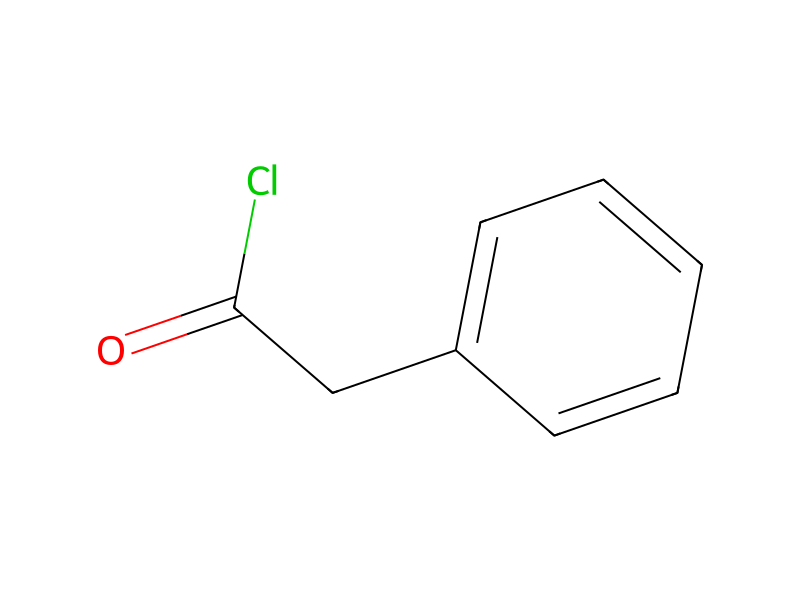
Phenylacetyl chloride → HCID 88688691, compound
Reaction equation

C1(CO[C:9](=[O:27])[NH:10][C@H:11]2[CH2:14][N:13]([C:15]([NH:17][P:18]([N:23]([CH3:25])[CH3:24])([N:20]([CH3:22])[CH3:21])=[O:19])=[O:16])[C:12]2=[O:26])C=CC=CC=1.[C:28]1([CH2:34]C(Cl)=O)[CH:33]=[CH:32][CH:31]=[CH:30][CH:29]=1>[Pd].C(N(CC)CC)C>[CH3:25][N:23]([P:18]([NH:17][C:15]([N:13]1[CH2:14][C@H:11]([NH:10][C:9](=[O:27])[CH2:34][C:28]2[CH:33]=[CH:32][CH:31]=[CH:30][CH:29]=2)[C:12]1=[O:26])=[O:16])([N:20]([CH3:21])[CH3:22])=[O:19])[CH3:24]Participants
5
Reactant 2

Product 1

Reagents, catalysts & solvents 2


Procedure
By a procedure analogous to that used in the second part of Example IV, (S)-[1-[[[bis-(dimethylamino)phophinyl]amino]carbonyl]2-oxo-3-azetidinyl]carbamic acid phenylmethyl ester, produced as in the previous Example, is hydrogenated in the presence of 10% Pd on carbon catalyst, and the intermediate thus obtained is acylated by reaction with phenylacetyl chloride and triethylamine to obtain the title compound.
Workup
- customthe intermediate thus obtained
Sources & evidence
- ORD record
- ord-a0b6cfeb6dc047f6a5bce5065a9d4a37
- Source dataset
- uspto-grants-1986_04
- Patent number
- US04584132
Reaction notes
Loading…