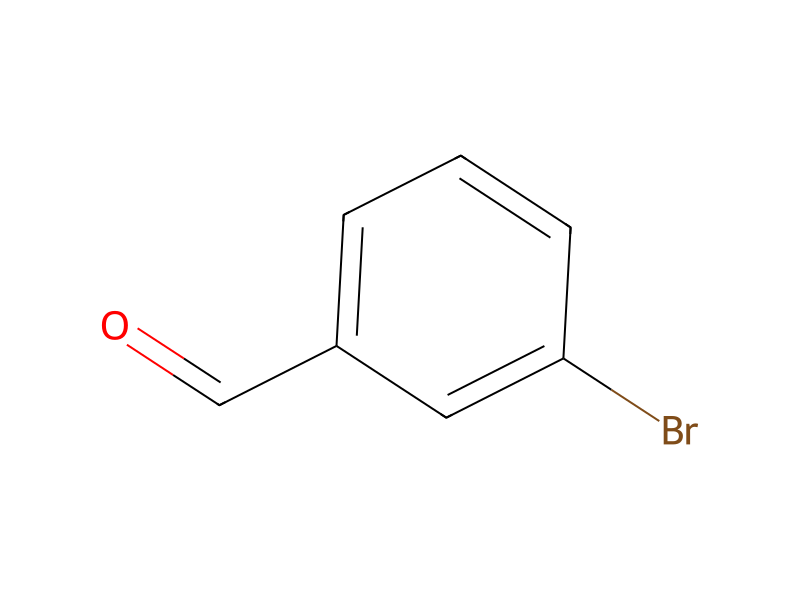
Benzaldehyde → 3-Bromobenzaldehyde
Reaction equation

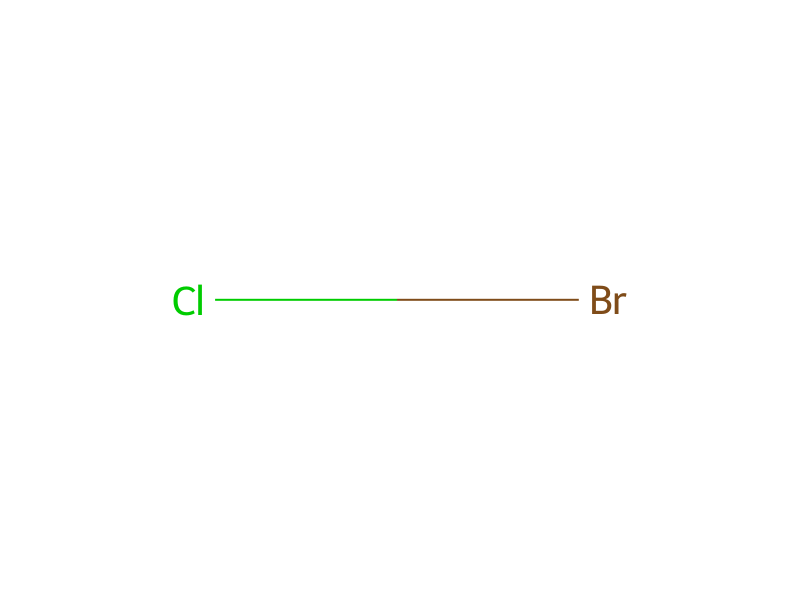
Br[CH2:2][Br:3].[Cl-].[Al+3].[Cl-].[Cl-].[CH:8](=[O:15])[C:9]1[CH:14]=C[CH:12]=[CH:11][CH:10]=1.BrCl.Cl>>[Br:3][C:2]1[CH:14]=[C:9]([CH:10]=[CH:11][CH:12]=1)[CH:8]=[O:15]Participants




Procedure
Charge 0.8 molar proportion of dibromomethane and 1.3 molar proportions of anhydrous aluminum chloride to a suitable reaction vessel. Add one molar proportion of benzaldehyde to the resultant slurry with agitation over a period of one hour at 40°-50° C. After completing the addition of the benzaldehyde, add one molar proportion of bromine chloride over a period of 4-5 hours while continuing agitation and maintaining the pot temperature at 50°-70° C. Continue agitation for an additional hour at 60°-70° C. Transfer the reaction mass to a flask containing dilute hydrochloric acid, separate the organic, and recover the solvent by distillation. The process results in the formation of 3-bromobenzaldehyde which is isolated in an 85% yield (99+% purity) by vacuum distillation.
Workup
- temperaturemaintaining the pot temperature at 50°-70° C
- customat 60°-70° C
- customseparate the organic, and
- customrecover the solvent
- distillationby distillation
Sources & evidence
- ORD record
- ord-c15aa9f8d1514d8abfa83687da406281
- Source dataset
- uspto-grants-1986_04
- Patent number
- US04585898
Reaction notes
Loading…