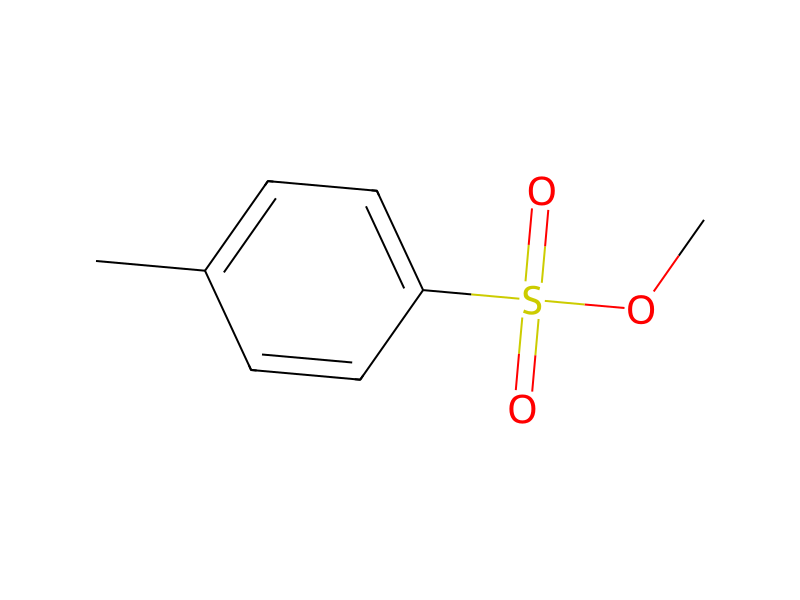
Methyl p-toluenesulfonate → HCID 20201040, compound
Reaction equation

[O:1]=[C:2]1[C:6]2[C:7]([C:11]3[CH:16]=[CH:15][C:14]([CH3:17])=[CH:13][CH:12]=3)=[N:8][C:9](=O)[C:5]=2[C:4]([C:18]2[CH:23]=[CH:22][C:21]([CH3:24])=[CH:20][CH:19]=2)=[N:3]1.[C:25](=[O:28])([O-])[O-].[K+].[K+].[C:31]1(C)C=CC(S(OC)(=O)=O)=CC=1.[N+](C1C=CC=CC=1)([O-])=O>>[O:1]=[C:2]1[C:6]2=[C:7]([C:11]3[CH:16]=[CH:15][C:14]([CH3:17])=[CH:13][CH:12]=3)[N:8]([CH3:9])[C:25](=[O:28])[C:5]2=[C:4]([C:18]2[CH:23]=[CH:22][C:21]([CH3:24])=[CH:20][CH:19]=2)[N:3]1[CH3:31]Participants
5




Procedure
9.5 parts of 1,4-diketo-3,6-di-(4'-methylphenyl)pyrrolo-[3,4-c]-pyrrole, 9 parts of anhydrous potassium carbonate, 24 parts of methyl p-toluenesulfonate and 110 parts of nitrobenzene are stirred at 200° C. for 1/2 hour. After the mixture has been cooled, the dye is filtered off and washed with a little nitrobenzene and then with methanol and hot water. After drying, 5.8 parts of 1,4-diketo-2,5-dimethyl-3,6-di-(4'-methylphenyl)-pyrrolo-[3,4-c]-pyrrole are obtained in the form of yellowish-tinged red crystals of melting point 260° C. (formula XIV). The dye gives pure yellow shades of good fastness properties on PES by the method described in Example 1. ##STR18##
Workup
- temperatureAfter the mixture has been cooled
- filtrationthe dye is filtered off
- washwashed with a little nitrobenzene
- customAfter drying
Sources & evidence
- ORD record
- ord-e4e90be360e6432b9c48c7e8f424b0be
- Source dataset
- uspto-grants-1986_04
- Patent number
- US04585878
Reaction notes
Loading…