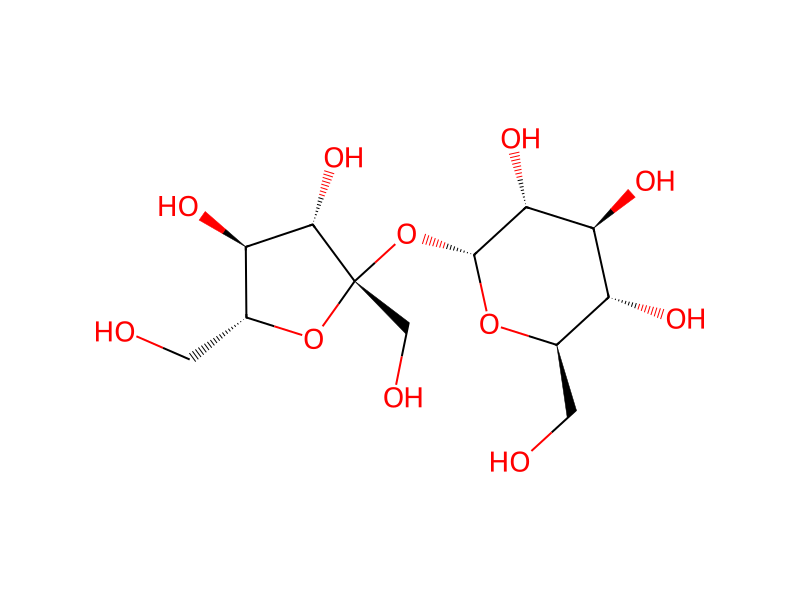
Sucrose → L-Aspartyl-D-alanine N-(2,2,4,4-tetramethyltetrahydrothiophene-3-yl)amide
Reaction equation

[NH2:1][CH:2]1[C:6]([CH3:8])([CH3:7])[CH2:5][S:4][C:3]1([CH3:10])[CH3:9].[NH2:11][C@H:12]([C:17]([NH:19][C@@H:20]([C:22](N)=[O:23])[CH3:21])=[O:18])[CH2:13][C:14](=[O:16])[OH:15].C(O)[C@H]1O[C@H](O[C@]2(CO)O[C@H](CO)[C@@H](O)[C@@H]2O)[C@H](O)[C@@H](O)[C@@H]1O>>[CH3:9][C:3]1([CH3:10])[CH:2]([NH:1][C:22](=[O:23])[C@@H:20]([CH3:21])[NH:19][C:17](=[O:18])[C@H:12]([CH2:13][C:14](=[O:15])[OH:16])[NH2:11])[C:6]([CH3:8])([CH3:7])[CH2:5][S:4]1Participants
4


Procedure
When levorotatory 3-amino-2,2,4,4-tetramethyltetrahydrothiophene, resolved by standard methods, was employed in the above procedure in place of the racemic amine the resulting L-aspartyl-D-alanine amide was found to be 800 times as sweet as sucrose.
Sources & evidence
- ORD record
- ord-fa20bc9e27154a16a777a6cea6761026
- Source dataset
- uspto-grants-1989_02
- Patent number
- US04804782
Reaction notes
Loading…