Triethylamine → HCID 21273507, compound
Reaction equation

ClC(OCCCC)=O.[N:9]1[C:13]2[CH:14]=[CH:15][CH:16]=[CH:17][C:12]=2[NH:11][C:10]=1[CH2:18][C:19]1[CH:27]=[CH:26][C:22]([C:23]([OH:25])=O)=[CH:21][CH:20]=1.[CH2:28]([N:30](CC)CC)C.Cl.CN>CN(C)C=O.O>[CH3:28][NH:30][C:23](=[O:25])[C:22]1[CH:21]=[CH:20][C:19]([CH2:18][C:10]2[NH:9][C:13]3[CH:14]=[CH:15][CH:16]=[CH:17][C:12]=3[N:11]=2)=[CH:27][CH:26]=1Participants
Reactant 4



Product 1

Reagents, catalysts & solvents 2


Procedure
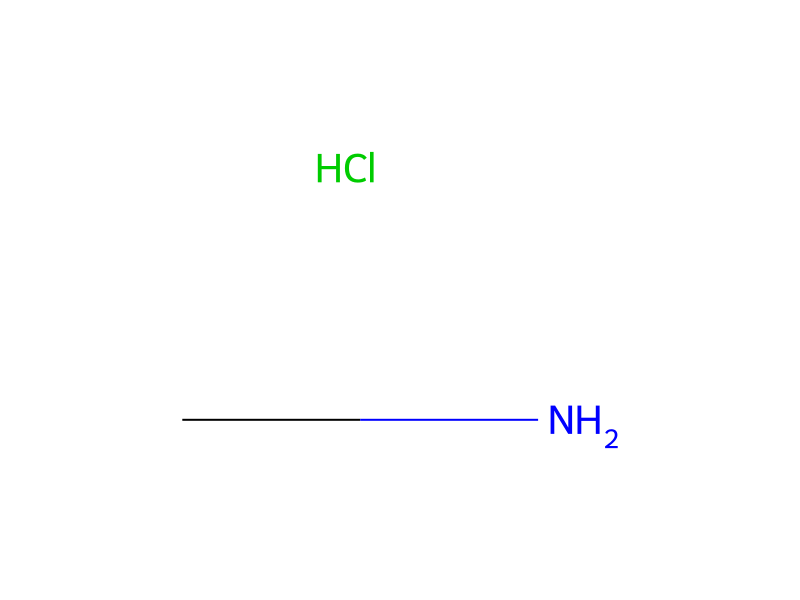
2.8 ml of butyl chloroformate are added dropwise at -5° to a solution of 5.0 g (0.020 mol) of p-[(2-benzimidazolyl)methyl]benzoic acid and 2.8 ml (0.020 mol) of triethylamine in 68 ml of dimethylformamide. After stirring at 0°-5° for 30 minutes 1.32 g (0.020 mol) of methylamine hydrochloride and 2.8 ml (0.020 mol) of triethylamine in 28 ml of dimethylformamide and 1.4 ml of water are added. The temperature is then left to rise to room temperature and the mixture is stirred for a further 18 hours. After concentration under reduced pressure the residue is chromatographed on 400 g of silica gel with chloroform/ethanol (4:1) as the elution agent. The uniform fractions give 2.0 g (38%) of N-methyl-p-[(2-benzimidazolyl)methyl]benzamide, m.p. 250°-255° (dec.), as a colourless powder.
Workup
- additionare added
- waitThe temperature is then left
- customto rise to room temperature
- concentrationAfter concentration under reduced pressure the residue
- customis chromatographed on 400 g of silica gel with chloroform/ethanol (4:1) as the elution agent
Sources & evidence
- ORD record
- ord-f4246d7edcf7421b8b20ed0209725102
- Source dataset
- uspto-grants-1989_02
- Patent number
- US04808605
Reaction notes
Loading…