Butyl bromide → 2,7-Dibromo-9,9-dibutyl-9H-fluorene
Reaction equation

[Br:1][C:2]1[CH:14]=[CH:13][C:12]2[C:11]3[C:6](=[CH:7][C:8]([Br:15])=[CH:9][CH:10]=3)[CH2:5][C:4]=2[CH:3]=1.[CH2:16](Br)[CH2:17][CH2:18][CH3:19].[OH-].[Na+]>[Cl-].C([N+](CCCC)(CCCC)CCCC)CCC>[CH2:16]([C:5]1([CH2:14][CH2:2][CH2:3][CH3:4])[C:4]2[CH:3]=[C:2]([Br:1])[CH:14]=[CH:13][C:12]=2[C:11]2[C:6]1=[CH:7][C:8]([Br:15])=[CH:9][CH:10]=2)[CH2:17][CH2:18][CH3:19]Participants
5
Reactant 3



Product 1

Reagents, catalysts & solvents 1
Procedure
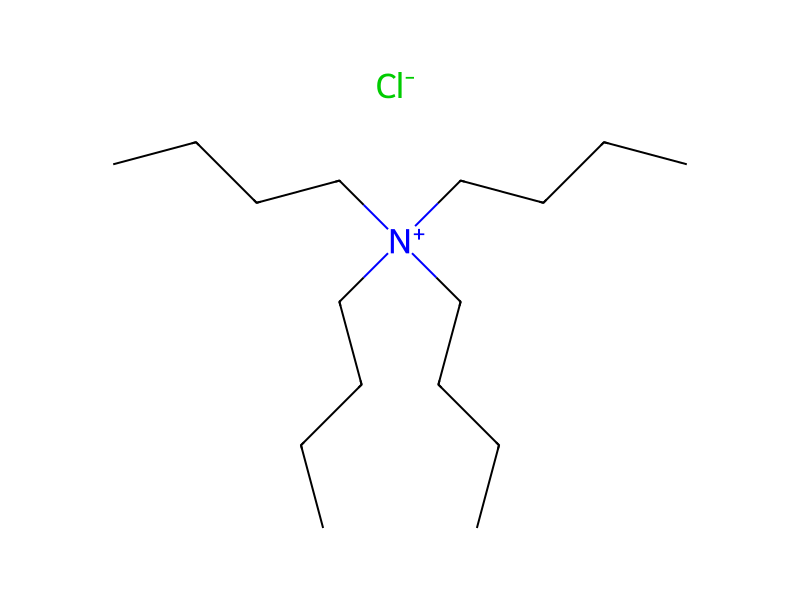
2,7-Dibromofluorene (32.4 g, 0.1 mole), n-butyl bromide (75 g, 0.55 mole), tetra-n-butylammonium chloride (1.5 g) and 50 percent aqueous NaOH solution were stirred vigorously at 80° C. for 1 hour. The reaction mixture was allowed to cool to room temperature and extracted with ether. The ether extracts were washed with water and dried over anhydrous magnesium sulfate. Removal of solvent gave a yellow solid which was recrystallized from 400 mL of ethanol to provide 9,9-di-n-butyl-2,7-dibromofluorene as colorless crystals (42 g, 96 percent yield), melting point 120.5° C. to 121.5° C. HPLC analysis showed that the product had a purity of 99.5 percent and the proton and carbon-13 NMR were consistent with the title structure.
Workup
- extractionextracted with ether
- washThe ether extracts were washed with water
- dry with materialdried over anhydrous magnesium sulfate
- customRemoval of solvent
- customgave a yellow solid which
- customwas recrystallized from 400 mL of ethanol
Sources & evidence
- ORD record
- ord-2d52ed845e6d4f1abbe071b46f13727c
- Source dataset
- uspto-grants-2001_07
- Patent number
- US06255447B1
Reaction notes
Loading…