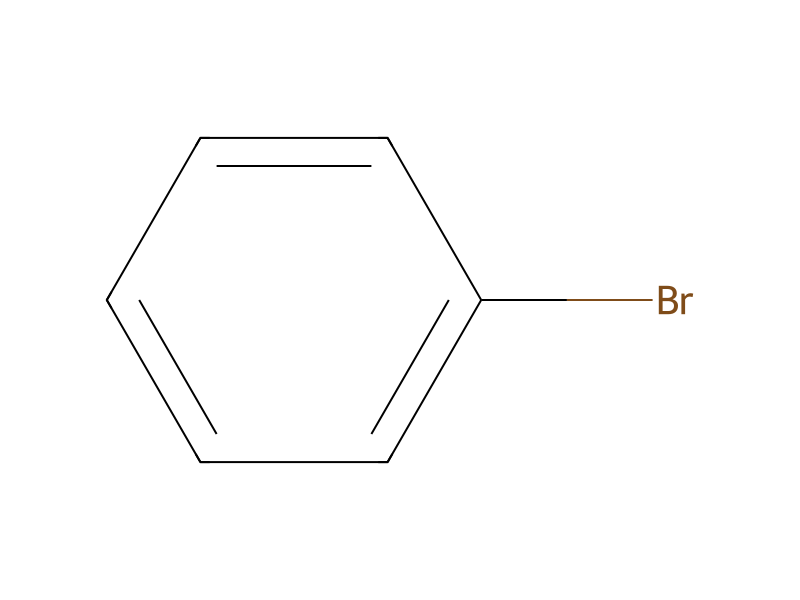
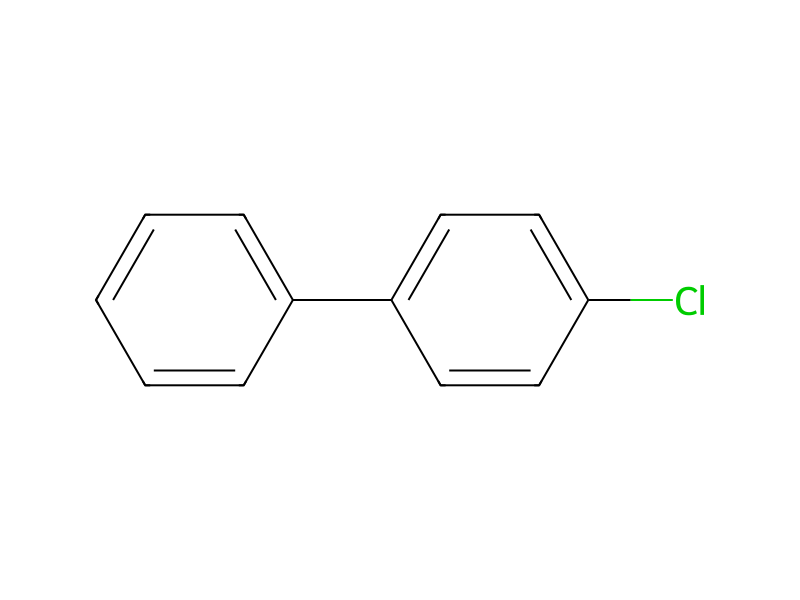
Bromobenzene → 2-[2-(4'-Chloro-biphenyl-4-YL)-2-oxo-ethyl]acrylic acid
Reaction equation

[Cl-].[Al+3].[Cl-].[Cl-].BrC1C=CC=CC=1.[C:12]1(=[O:19])[O:18][C:16](=[O:17])[CH2:15][C:13]1=[CH2:14].[Cl:20][C:21]1[CH:26]=[CH:25][C:24]([C:27]2[CH:32]=[CH:31][CH:30]=[CH:29][CH:28]=2)=[CH:23][CH:22]=1>>[Cl:20][C:21]1[CH:22]=[CH:23][C:24]([C:27]2[CH:32]=[CH:31][C:30]([C:16](=[O:17])[CH2:15][C:13](=[CH2:14])[C:12]([OH:18])=[O:19])=[CH:29][CH:28]=2)=[CH:25][CH:26]=1Participants
5



Conditions
- Temperature
- 0 °C
Procedure
21.2 g of anhydrous aluminum chloride are introduced into 50 g of bromobenzene and the mixture is cooled to 0° C. A solid mixture of 8.3 g of itaconic anhydride and 13.2 g of 4-chlorobiphenyl is added in portions in the course of one hour. The reaction mixture is stirred at 0° C. for two hours and then added to 100 g of ice water. The solid reaction product is filtered off and washed twice with water (50 ml). After recrystallization from ethyl acetate, the product is dried at room temperature and about 100 mbar until free of solvent and water. 4-(4′-Chlorobiphenyl-4-yl)-4-keto-2-methylenebutyric acid is obtained in a yield of 50% as a colorless, finely crystalline powder.
Workup
- additionis added in portions in the course of one hour
- customThe solid reaction product
- filtrationis filtered off
- washwashed twice with water (50 ml)
- customAfter recrystallization from ethyl acetate
- customthe product is dried at room temperature
Sources & evidence
- ORD record
- ord-a4859f2086204f9c9aacc2a3b00a1115
- Source dataset
- uspto-grants-2001_07
- Patent number
- US06265607B1
Reaction notes
Loading…