Ethylene Glycol → 2-(4-Bromophenyl)-1,3-dioxolane
Reaction equation

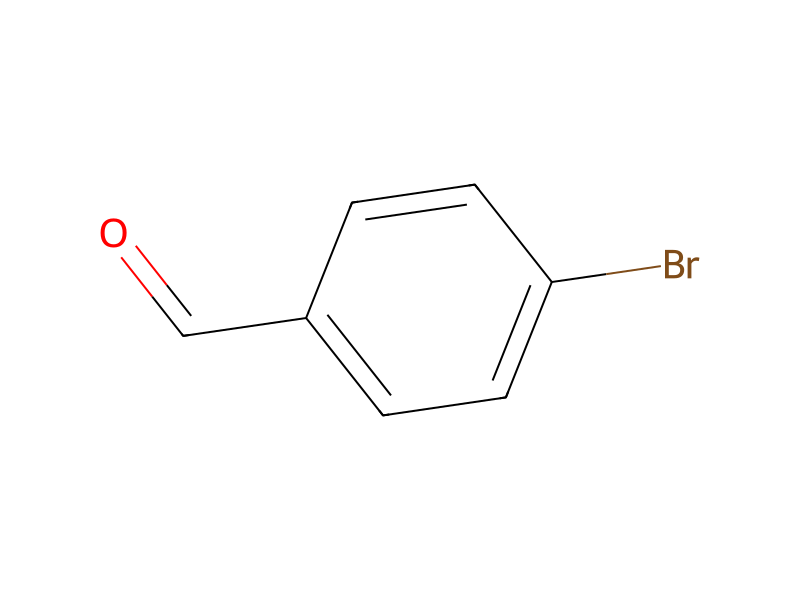
[Br:1][C:2]1[CH:9]=[CH:8][C:5]([CH:6]=[O:7])=[CH:4][CH:3]=1.[CH2:10](O)[CH2:11][OH:12]>C1C=CC=CC=1.C1(C)C=CC(S(O)(=O)=O)=CC=1>[Br:1][C:2]1[CH:9]=[CH:8][C:5]([CH:6]2[O:12][CH2:11][CH2:10][O:7]2)=[CH:4][CH:3]=1Participants
5
Reactant 2

Product 1

Reagents, catalysts & solvents 2


Procedure
A solution of 4-bromobenzaldehyde (5 g, 0.027 mol), ethylene glycol (7.0 g, 0.11 mmol), and p-toluenesulfonic acid (0.1 g, 0.5 mmol) in benzene was heated at reflux for 24 h using a Dean-Stark setup to remove water. The reaction was taken up in diethyl ether (100 mL) and washed with water (5×30 mL) and brine (30 mL). The organic phase was dried over magnesium sulfate and concentrated under vacuum to afford 2-(4′-bromophenyl)-1,3-dioxolane (5.95 g).
Workup
- temperatureat reflux for 24 h
- customto remove water
- washwashed with water (5×30 mL) and brine (30 mL)
- dry with materialThe organic phase was dried over magnesium sulfate
- concentrationconcentrated under vacuum
Sources & evidence
- ORD record
- ord-608781426b45460a933b29f9937cb07c
- Source dataset
- uspto-grants-2001_07
- Patent number
- US06268513B1
Reaction notes
Loading…