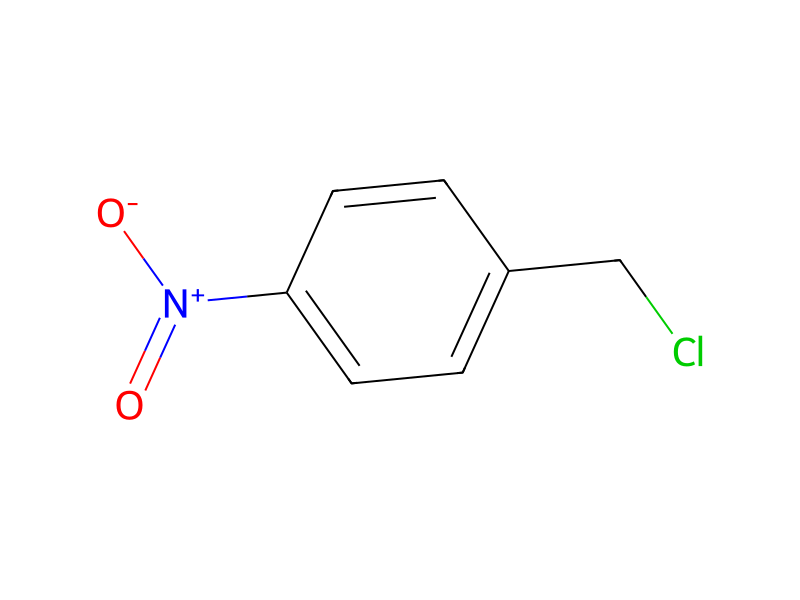
4-Nitrobenzyl chloride → 1-(3,5-Dibromophenyl)-4-(p-nitrobenzyl)piperazine
Reaction equation

[N+:1]([C:4]1[CH:11]=[CH:10][C:7]([CH2:8]Cl)=[CH:6][CH:5]=1)([O-:3])=[O:2].Cl.Cl.[Br:14][C:15]1[CH:16]=[C:17]([N:22]2[CH2:27][CH2:26][NH:25][CH2:24][CH2:23]2)[CH:18]=[C:19]([Br:21])[CH:20]=1>C(N(CC)CC)C>[Br:21][C:19]1[CH:18]=[C:17]([N:22]2[CH2:27][CH2:26][N:25]([CH2:8][C:7]3[CH:10]=[CH:11][C:4]([N+:1]([O-:3])=[O:2])=[CH:5][CH:6]=3)[CH2:24][CH2:23]2)[CH:16]=[C:15]([Br:14])[CH:20]=1Participants
4
Reactant 2

Product 1

Reagents, catalysts & solvents 1

Procedure
In the manner given in Example 1A, p-nitrobenzyl chloride is reacted with (3,5-dibromophenyl)piperazine dihydrochloride in the presence of triethylamine to give 1-(3,5-dibromophenyl)-4-(p-nitrobenzyl)piperazine.
Sources & evidence
- ORD record
- ord-2567420152ec4921bce11e798daa692e
- Source dataset
- uspto-grants-1979_02
- Patent number
- US04140775
Reaction notes
Loading…