Hydrochloric Acid → 2,6-dibromo-3-methyl-4-nitrophenol
Reaction equation

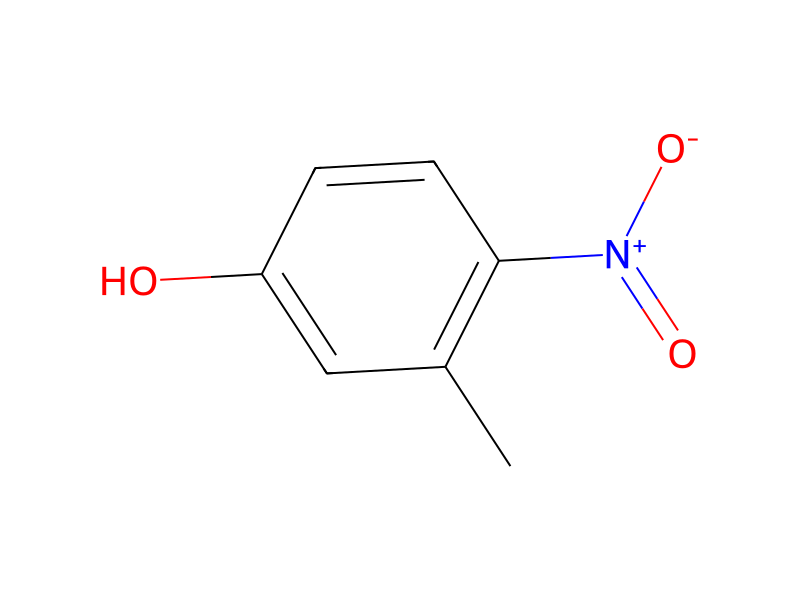
[CH3:1][C:2]1[CH:3]=[C:4]([OH:11])[CH:5]=[CH:6][C:7]=1[N+:8]([O-:10])=[O:9].[Br-:12].[Br-:13].[Br-].C([N+](C)(C)C)C1C=CC=CC=1.C([N+](C)(C)C)C1C=CC=CC=1.C([N+](C)(C)C)C1C=CC=CC=1.C([O-])([O-])=O.[Ca+2].Cl>C(Cl)Cl.CO>[Br:12][C:3]1[C:2]([CH3:1])=[C:7]([N+:8]([O-:10])=[O:9])[CH:6]=[C:5]([Br:13])[C:4]=1[OH:11]Participants
7






Conditions
- Temperature
- 4 °C
Procedure
3-Methyl-4-nitrophenol (1.50 g, 9.75 mmol) was dissolved in a mixture of CH2Cl2 (30 mL) and methanol (30 mL) and cooled to 4° C. While stirring, benzyltrimethylammoniumtribromide (7.6 g, 19.5 mmol) and CaCO3 (1.95 g, 19.5 mmol) was added and the reaction was allowed to warm to room temperature. After 30 minutes, 1N HCl (45 mL) was added and reaction mixture left for 16 hours at 4° C. The organic phase was removed in vacuo and the resulting precipitate was collected by filtration and washed by water. The damp solid was co-evaporated with toluene and Et2O to yield 2.8 g (93%) of 2,6-dibromo-3-methyl-4-nitrophenol as a white solid.
Workup
- temperatureto warm to room temperature
- customreaction mixture
- waitleft for 16 hours at 4° C
- customThe organic phase was removed in vacuo
- filtrationthe resulting precipitate was collected by filtration
- washwashed by water
Sources & evidence
- ORD record
- ord-0f6e2fab26c248aaa544b390801be90d
- Source dataset
- uspto-grants-2008_03
- Patent number
- US07342127B2
Reaction notes
Loading…