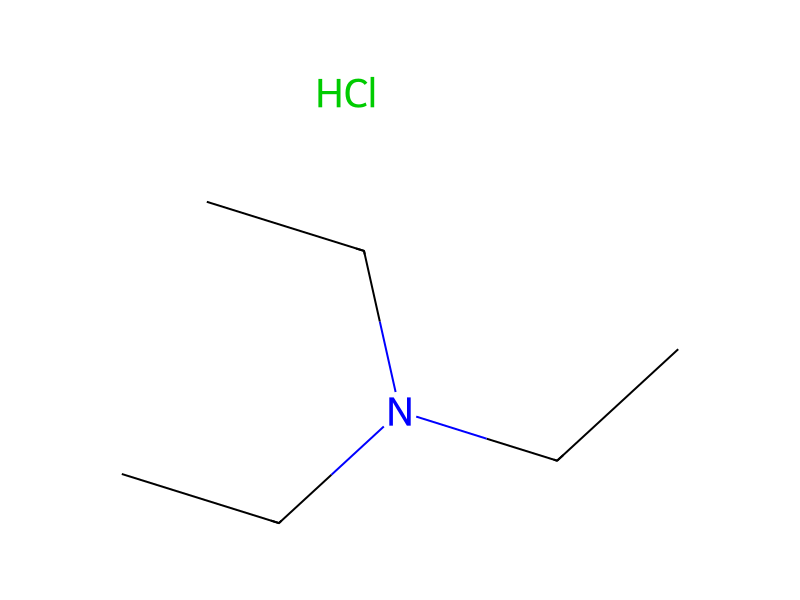
Triethylamine hydrochloride → O,O-diethyl N-(chlorothio)-n-propylphosphoramidothioate
Reaction equation

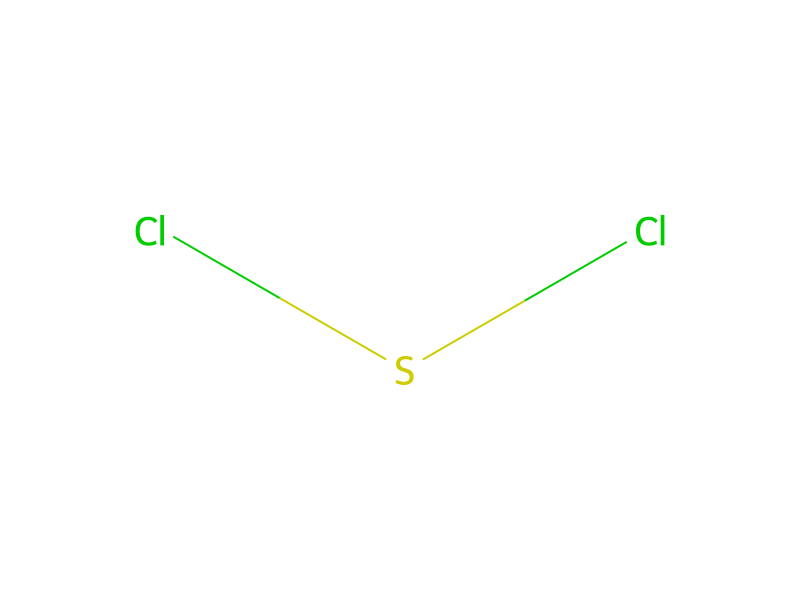
[CH2:1]([NH:4][P:5](=[S:12])([O:9][CH2:10][CH3:11])[O:6][CH2:7][CH3:8])[CH2:2][CH3:3].[S:13](Cl)[Cl:14].Cl.C(N(CC)CC)C>CCCCCC.C(N(CC)CC)C>[Cl:14][S:13][N:4]([CH2:1][CH2:2][CH3:3])[P:5](=[S:12])([O:9][CH2:10][CH3:11])[O:6][CH2:7][CH3:8]Participants
6




Procedure
A solution of 2.98 gm. (0.014 mole) O,O-diethyl n-propylphosphoramidothioate in 10 ml. hexane and 2 ml. triethylamine is added to a cold (0° C.) solution of 1.0 ml. (0.016 mole) sulfur dichloride in 10 ml. hexane slowly and with stirring. There is vigorous reaction and heavy precipitation of triethylamine hydrochloride. An additional 20 ml. hexane is added. The reaction mixture is kept at 0° to 5° C. and stirred for 30 minutes, then it is filtered. The filtrate is concentrated to a pale yellow oil by evaporating the hexane under reduced pressure. The oil comprises the desired O,O-diethyl N-(chlorothio)-n-propylphosphoramidothioate which can be used for further reactions with N-methylcarbamates.
Workup
- customis kept at 0° to 5° C.
- filtrationit is filtered
- concentrationThe filtrate is concentrated to a pale yellow oil
- customby evaporating the hexane under reduced pressure
Sources & evidence
- ORD record
- ord-e235228a67c64d8bb54a0ad6f757e14e
- Source dataset
- uspto-grants-1980_05
- Patent number
- US04201733
Reaction notes
Loading…