Oxalyl chloride → N-(2-acetoxy-3,5-dichlorobenzoyl)-L-phenylalanine
Reaction equation

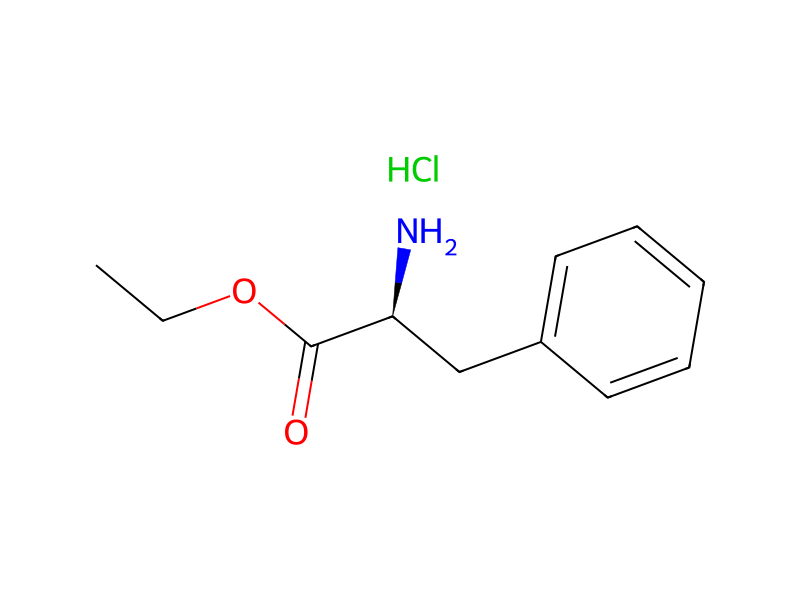
C(Cl)(=O)C(Cl)=O.[C:7]([O:10][C:11]1[C:19]([Cl:20])=[CH:18][C:17]([Cl:21])=[CH:16][C:12]=1[C:13](Cl)=[O:14])(=[O:9])[CH3:8].Cl.C([O:25][C:26](=[O:36])[C@H:27]([CH2:29][C:30]1[CH:35]=[CH:34][CH:33]=[CH:32][CH:31]=1)[NH2:28])C>C(N(CC)CC)C>[C:7]([O:10][C:11]1[C:19]([Cl:20])=[CH:18][C:17]([Cl:21])=[CH:16][C:12]=1[C:13]([NH:28][C@H:27]([C:26]([OH:36])=[O:25])[CH2:29][C:30]1[CH:35]=[CH:34][CH:33]=[CH:32][CH:31]=1)=[O:14])(=[O:9])[CH3:8]Participants




Procedure
In one non-limiting example of a synthesis method for N-(2-hydroxy-3,5-dichlorobenzoyl)-L-phenylalanine, synthesis begins with reaction of 3,5-dichlorosalicylic acid with acetic anhydride to obtain 2-acetoxy-3,5-dichlorobenzoic acid which in turn is converted into the acid chloride by the action of oxalyl chloride. The 2-acetoxy-3,5-dichlorobenzoic acid chloride is then reacted in situ with phenylalanine ethyl ester hydrochloride, in the presence of triethylamine, to yield ethyl ester of N-(2-acetoxy-3,5-dichlorobenzoyl)-L-phenylalanine. The last step of the synthesis method introduces novel and highly specific hydrolysis of both ester functions of N-(2-acetoxy-3,5-dichloro benzoyl)-L-phenylalanine ethyl ester to obtain the OTA template, N-(2-hydroxy-3,5-dichlorobenzoyl)-L-phenylalanine (I) with 98% yield. This synthesis reaction is summarized in FIG. 2.
Sources & evidence
- ORD record
- ord-bd3788369a204a999c8ae2639dc858c6
- Source dataset
- uspto-grants-2014_12
- Patent number
- USRE045274E1
Reaction notes
Loading…