Water → 3,4-Dibromo-6-(trifluoromethyl)pyridazine
Reaction equation

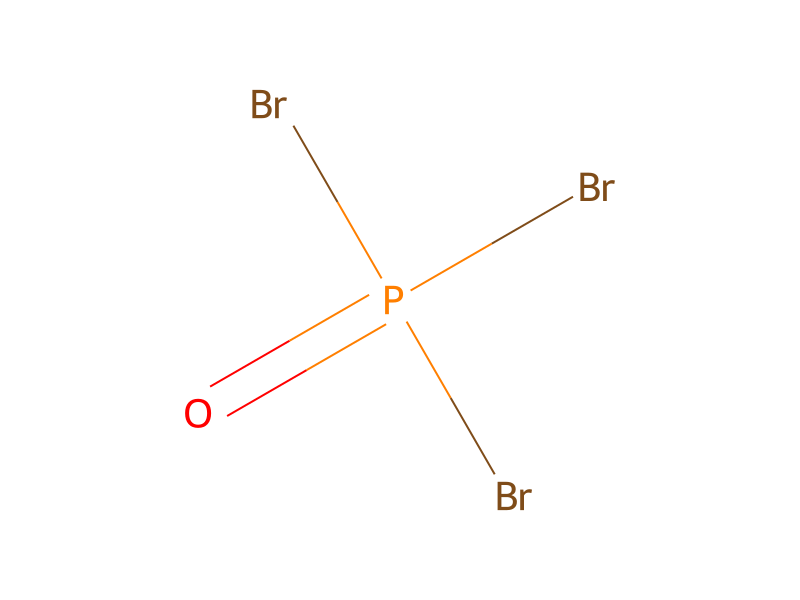
[Br:1][C:2]1[CH:7]=[C:6]([C:8]([F:11])([F:10])[F:9])[N:5]=[N:4][C:3]=1O.P(Br)(Br)([Br:15])=O.O.C(=O)([O-])O.[Na+]>ClCCl>[Br:15][C:3]1[N:4]=[N:5][C:6]([C:8]([F:11])([F:10])[F:9])=[CH:7][C:2]=1[Br:1]Participants
6





Conditions
- Temperature
- 60 °C
Procedure
A mixture of 4-bromo-6-trifluoromethyl-pyridazin-3-ol (D3) (4.0 g, 16.4 mmol) and phosphorus oxybromide (28.2 g, 98.4 mmol) was stirred at 60° C. for 4 h. After this period, the reaction mixture was poured into a mixture of ice and water, diluted with dichloromethane and neutralized with a saturated solution of sodium hydrogen carbonate. The organic layer was separated, dried (MgSO4) and the solvent evaporated in vacuo. The crude product was purified by flash column chromatography (silica gel; 3% ammonia in methanol (7M)/dichloromethane). The desired fractions were collected and evaporated in vacuo. to yield D5 (2.28 g, 46%) as a solid. C5HBr2F3N2 requires 305; Found 306 (MH+).
Workup
- waitAfter this period
- customThe organic layer was separated
- dry with materialdried (MgSO4)
- customthe solvent evaporated in vacuo
- customThe crude product was purified by flash column chromatography (silica gel; 3% ammonia in methanol (7M)/dichloromethane)
- customThe desired fractions were collected
- customevaporated in vacuo
Sources & evidence
- ORD record
- ord-5e5d8b9d9bb84c4eae55723d312a8f7e
- Source dataset
- uspto-grants-2014_12
- Patent number
- US08906921B2
Reaction notes
Loading…