Pyrrole → HCID 86673204, compound
Reaction equation

[CH:1]1[C:14]2[C:15]3=[C:16]4[C:11](=[CH:12][CH:13]=2)[CH:10]=[CH:9][CH:8]=[C:7]4[CH:6]=[CH:5][C:4]3=[CH:3][CH:2]=1.[NH:17]1[CH:21]=[CH:20][CH:19]=[CH:18]1>[N+](C)([O-])=O>[CH:8]1[C:7]2[C:16]3=[C:15]4[C:4](=[CH:5][CH:6]=2)[CH:3]=[CH:2][CH:1]=[C:14]4[CH:13]=[CH:12][C:11]3=[CH:10][CH:9]=1.[NH:17]1[CH:21]=[CH:20][CH:19]=[CH:18]1Participants
4
Reactant 2
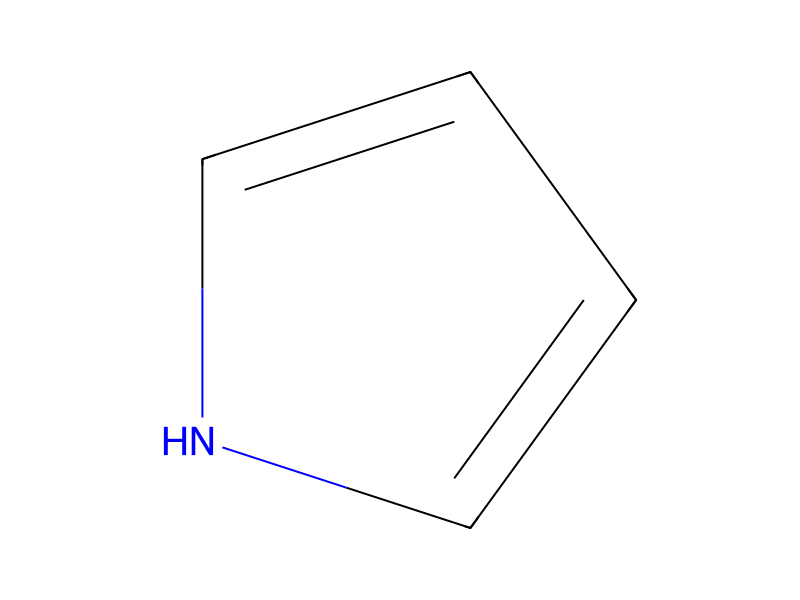

Product 1

Reagents, catalysts & solvents 1

Procedure
To investigate the initiation and progression of the copolymerization reaction, the open circuit potential and the polymerization temperature of the reaction mixture are monitored during the copolymerization. Pyrene and pyrrole are reacted at different molar ratios using anhydrous ferric chloride as the oxidant in the presence of nitromethane. The molar ratios of pyrene to pyrrole (Pyre/Pyrr) added to the reaction are 90:10, 70:30, and 30:70, respectively. The molar ratio of oxidant to the total amount of the monomers for each reaction is 5:1. The reaction is conducted at 50° C. for 30 hours.
Workup
- customthe initiation and progression of the copolymerization reaction
- customthe open circuit potential and the polymerization temperature of the reaction mixture are monitored during the copolymerization
Sources & evidence
- ORD record
- ord-cde47d007d974831afff6d253baa9bc6
- Source dataset
- uspto-grants-2014_12
- Patent number
- US08907015B2
Reaction notes
Loading…