Water → 2,4-Dichloro-6-morpholino-1,3,5-triazine
Reaction equation

[N:1]1[C:8]([Cl:9])=[N:7][C:5](Cl)=[N:4][C:2]=1[Cl:3].C(N(CC)CC)C.[NH:17]1[CH2:22][CH2:21][O:20][CH2:19][CH2:18]1.O>CC(C)=O>[Cl:9][C:8]1[N:1]=[C:2]([Cl:3])[N:4]=[C:5]([N:17]2[CH2:22][CH2:21][O:20][CH2:19][CH2:18]2)[N:7]=1Participants
6
Reactant 4

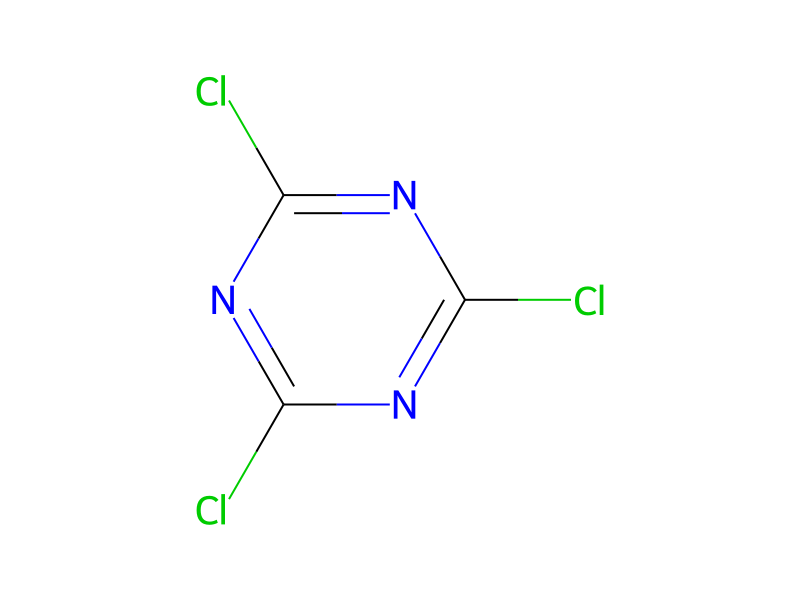


Product 1

Reagents, catalysts & solvents 1

Conditions
- Temperature
- -5 °C
Procedure
Cyanuric chloride (10.0 g, 54.0 mmol) dissolved in acetone (100 ml) was cooled to −5° C., slowly added with triethylamine (4.70 ml, 49.0 mmol) dropwise and further, slowly added with morpholine (7.50 g, 54.0 mmol) dropwise. The reaction mixture was stirred at the same temperature for one hour and then stirred at room temperature for one hour. The reaction solution was poured into water (500 ml). The precipitated crystals were collected by filtration, washed with trace amount of acetone and dried to obtain 9.70 g (yield: 69%) of 2,4-dichloro-6-morpholino-1,3,5-triazine as colorless crystals with melting point of 155° C.-157° C.
Workup
- stirringstirred at room temperature for one hour
- filtrationThe precipitated crystals were collected by filtration
- washwashed with trace amount of acetone
- customdried
Sources & evidence
- ORD record
- ord-73718f5800fa4e668ff045ddbc59c5c0
- Source dataset
- uspto-grants-2014_12
- Patent number
- US08921361B2
Reaction notes
Loading…