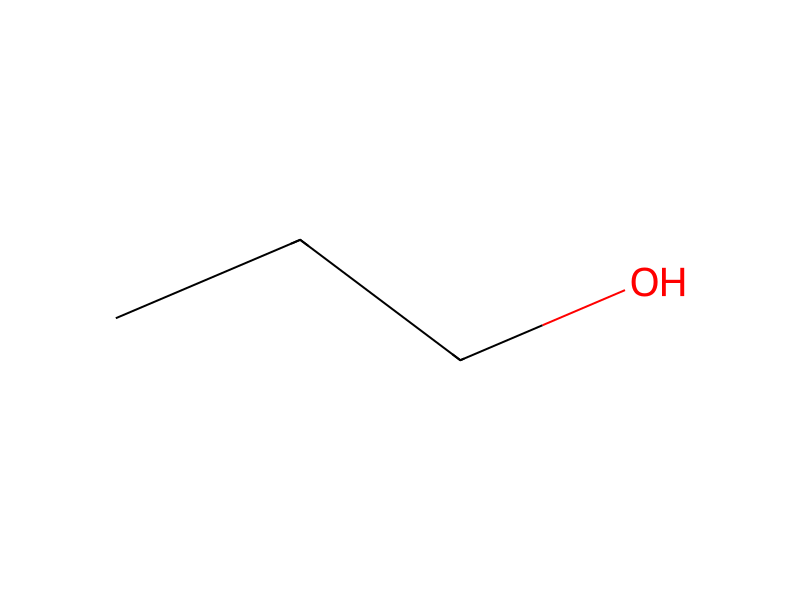
1-Propanol → Benzeneacetic acid, propyl ester
Reaction equation

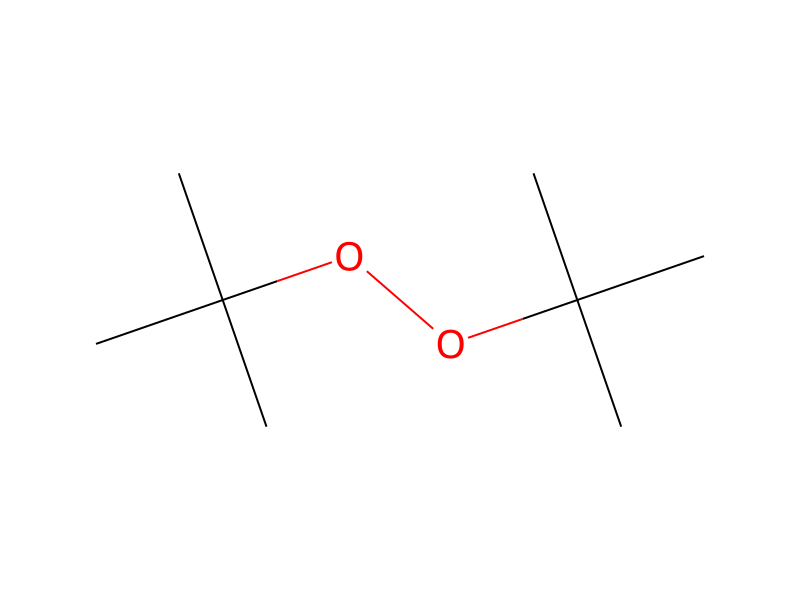
[C:1]1([CH3:7])[CH:6]=[CH:5][CH:4]=[CH:3][CH:2]=1.[C:8]([O:12]OC(C)(C)C)(C)(C)C.[C]=O.[CH2:20]([OH:23])[CH2:21][CH3:22]>>[C:1]1([CH2:7][C:8]([O:23][CH2:20][CH2:21][CH3:22])=[O:12])[CH:6]=[CH:5][CH:4]=[CH:3][CH:2]=1Participants



Conditions
- Temperature
- 120 °C
Procedure
Toluene (1.38 g), n-propanol (60 mg), di-tert-butyl peroxide (73 mg, 1 equivalent), and Pd(Xantphos)Cl2 (3.8 mg, 1 mol %) were added into a reaction kettle, into which 10 atm carbon monoxide was introduced. The reaction was heated to 120° C., and stirred at this constant temperature for 16 h. After the reaction was completed, carbon monoxide was discharged, and 78 mg n-propyl phenylacetate was obtained by column chromatography, in a yield of 88%. 1HNMR (400 MHz, CDCl3) δ 0.88 (t, J=7.6 Hz, 3H), 1.59-1.67 (m, 2H), 3.61 (s, 2H), 4.12 (t, J=6.8 Hz, 2H), 7.23-7.33 (m, 5H); 13CNMR (100 MHz, CDCl3) δ 10.3, 21.9, 41.5, 66.4, 127.0, 129.3, 134.3, 171.7; HRMS (ESI) calcd. for C11H14NaO2 [M+Na]: 201.0886. found: 201.0886. The n-propyl phenylacetate obtained was dissolved in 1,4-dioxane. 6 N sodium hydroxide solution was added, and the reaction was heated to 60° C. After 2 h of reaction, the pH value was adjusted to 1 by adding 2 N hydrochloric acid. After removing the organic solvent under reduced pressure, 56 mg product phenylacetic acid was obtained by extraction with ethyl acetate, and the yield of hydrolysis was 94%.
Workup
- additionwas introduced
Sources & evidence
- ORD record
- ord-7f48d7b0f8774bd7a2fc2151f6cce186
- Source dataset
- uspto-grants-2014_12
- Patent number
- US08921591B2
Reaction notes
Loading…