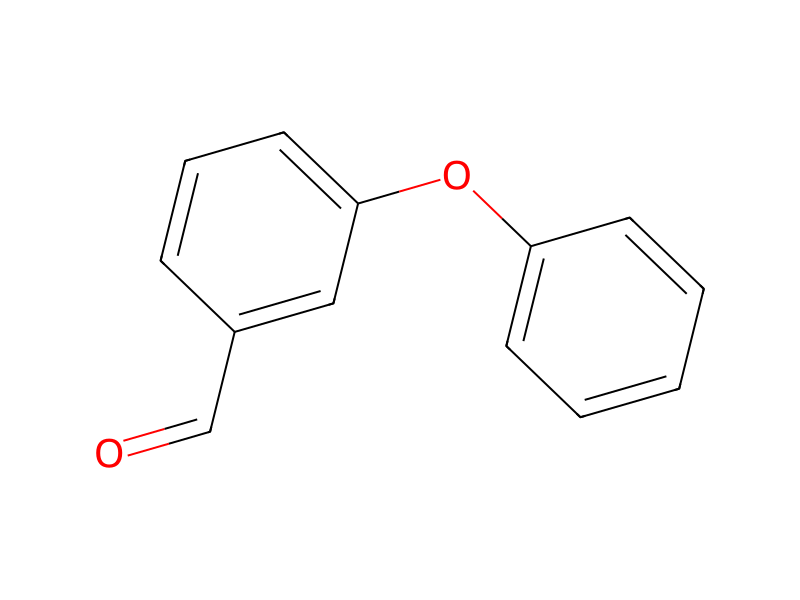
Cyanide → 3-Phenoxybenzaldehyde
Reaction equation

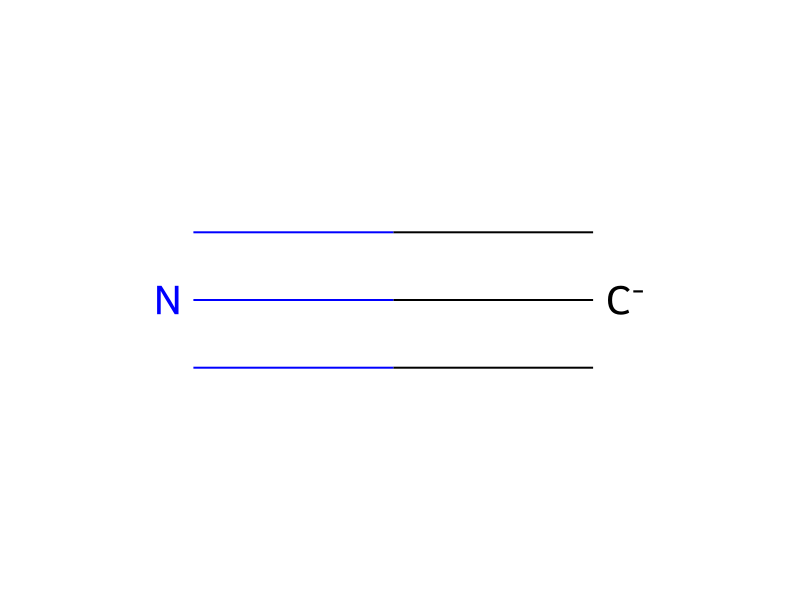
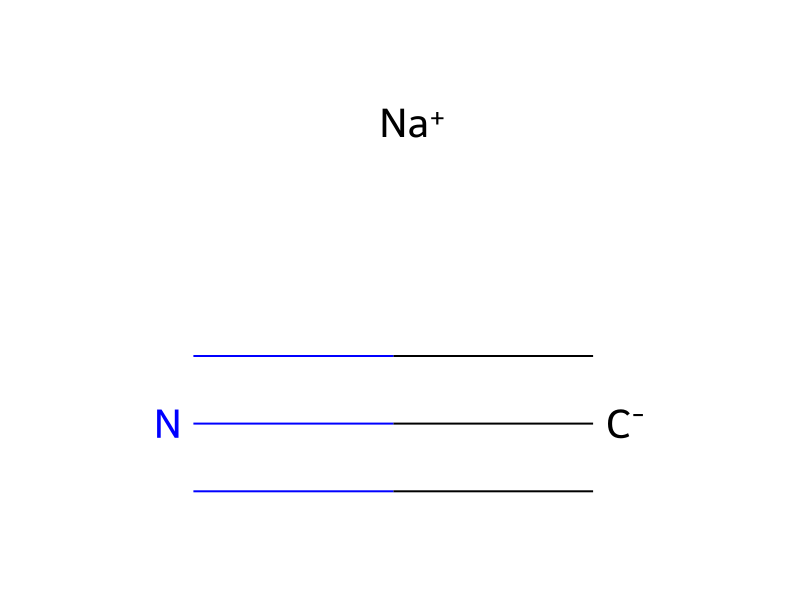
[CH:1]1[CH:6]=[CH:5][C:4]([O:7][C:8]2[CH:13]=[C:12]([CH:14]([OH:17])C#N)[CH:11]=[CH:10][CH:9]=2)=[CH:3][CH:2]=1.[C-]#N.[C-]#N.[Na+]>>[O:7]([C:8]1[CH:13]=[C:12]([CH:11]=[CH:10][CH:9]=1)[CH:14]=[O:17])[C:4]1[CH:3]=[CH:2][CH:1]=[CH:6][CH:5]=1Participants

Procedure
As has been indicated above, m-phenoxybenzyl chloride, alone or in admixture with m-phenoxybenzal chloride, may be converted to m-phenoxybenzaldehyde by a Sommelet reaction, using hexamine (or ammonia and formaldehyde) and an aqueous organic acid. If the Sommelet reaction is carried out in the presence of other compounds such as unreacted m-phenoxytoluene, the crude m-phenoxybenzaldehyde is isolated by extraction with a suitable solvent such as diisopropyl ether and it may then be purified by preparing the corresponding bisulphite compound, washing it with solvent and subsequently regenerating the pure aldehyde by treatment with an acid or base. Alternatively, the bisulphite compound may be isolated and dried to obtain a pure material which can be converted directly to m-phenoxybenzaldehyde cyanohydrin by reaction with a cyanide such as sodium cyanide, thereby avoiding the additional stage of isolating the purified m-phenoxybenzaldehyde.
Workup
- custommay then be purified by preparing the corresponding bisulphite compound
- washwashing it with solvent
- customAlternatively, the bisulphite compound may be isolated
- customdried
- customto obtain a pure material which
Sources & evidence
- ORD record
- ord-80e474656b3345379bf9563f56b5f8fc
- Source dataset
- uspto-grants-1981_02
- Patent number
- US04250340
Reaction notes
Loading…