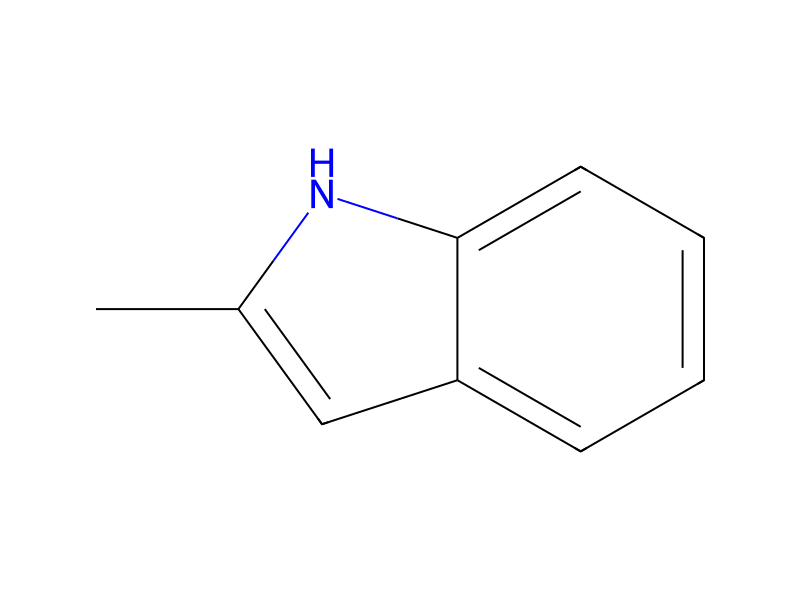
2-Methylindole → HCID 12248790, compound
Reaction equation

Cl[C:2]1[C:3](Cl)=[C:4](Cl)[C:5](Cl)=[C:6]2[C:11](=[O:12])[O:10][C:8](=[O:9])[C:7]=12.[CH3:16][C:17]1[NH:18][C:19]2[C:24]([CH:25]=1)=[CH:23][CH:22]=[CH:21][CH:20]=2>C(Cl)CCl>[C:16]1([C:17]2[NH:18][C:19]3[C:24]([C:25]=2[C:8]([C:7]2[CH:2]=[CH:3][CH:4]=[CH:5][C:6]=2[C:11]([OH:10])=[O:12])=[O:9])=[CH:23][CH:22]=[CH:21][CH:20]=3)[CH:4]=[CH:3][CH:2]=[CH:7][CH:6]=1Participants
4
Reactant 2

Product 1

Reagents, catalysts & solvents 1

Procedure
Employing a procedure similar to that described in part A of Example 10 above, 7.15 g (0.025 mole) of tetrachlorophthalic anhydride and 3.65 g (0.028 mole) of 2-methylindole were interacted in 100 ml of ethylene dichloride to obtain 2-[(2-methyl-3-indolyl)carbonyl]-4,5,6,7-tetrachlorobenzoic acid (Formula VIII: R0 =R1 =R2 =R3 =Cl; R5 =CH3 ; R6 =Y1 =H), an orange solid melting at 200°-201° C.
Sources & evidence
- ORD record
- ord-35eacc4ccefe47ff80508a7bcfa22fdf
- Source dataset
- uspto-grants-1981_02
- Patent number
- US04251446
Reaction notes
Loading…