Ammonia → 1,5-Diaminonaphthalene
Reaction equation

[C:1]1(S([O-])(=O)=O)[C:10]2[CH:9]=[CH:8][CH:7]=[C:6](S([O-])(=O)=O)[C:5]=2[CH:4]=[CH:3][CH:2]=1.[Na+].[Na+].[NH2-:21].[Na+].[NH3:23]>>[NH2:21][C:1]1[C:10]2[C:5](=[C:6]([NH2:23])[CH:7]=[CH:8][CH:9]=2)[CH:4]=[CH:3][CH:2]=1Participants
4


Procedure
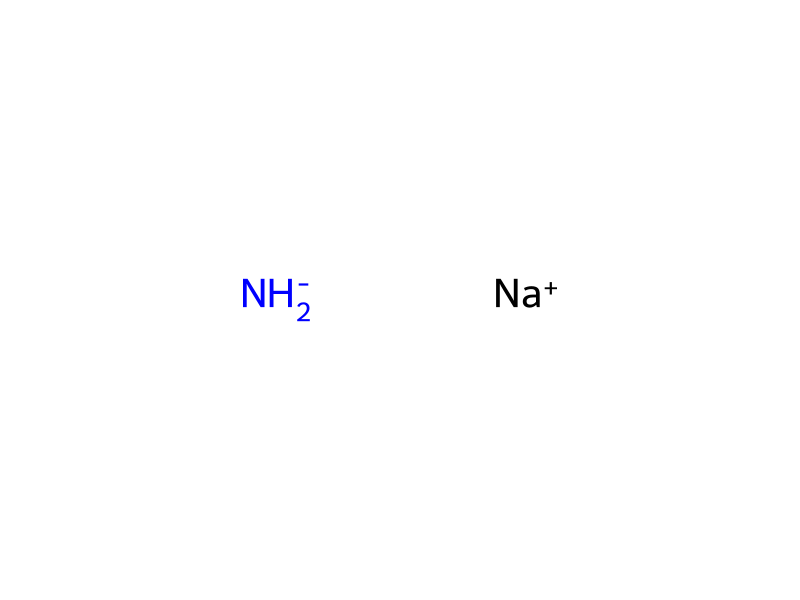
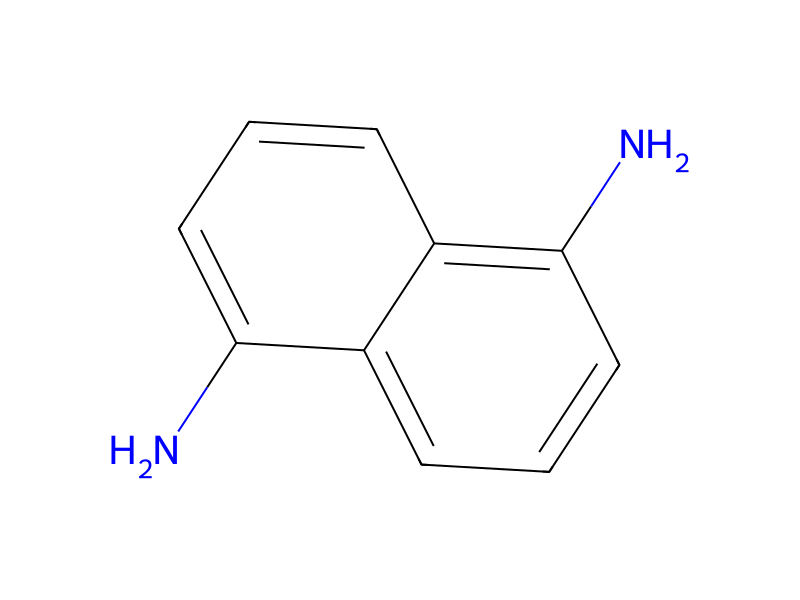
In a 200-ml autoclave were placed 26.6 grams (0.08 mole) of anhydrous sodium 1,5-naphthalene disulfonate, 17.6 grams (0.44 mole) of sodium amide and 80 ml of liquid ammonia in the same manner as in Example 1. The resultant mixture was heated at 180° C for 10 hours. The reaction pressure in the autoclave was 160 atm. during the reaction. After the ammonia was removed 30 ml of methanol was added to the reaction mixture for solvolysis. Thereafter the product was treated in the same manner as in Example 2, whereby 10.7 grams of 1,5-diaminonaphthalene was obtained. Yield was 84.5%.
Workup
- customThe reaction pressure in the autoclave
- customduring the reaction
- customAfter the ammonia was removed 30 ml of methanol
- additionwas added to the reaction mixture for solvolysis
- additionThereafter the product was treated in the same manner as in Example 2
Sources & evidence
- ORD record
- ord-70e0eb62538d40efac5979c168e51986
- Source dataset
- uspto-grants-1977_01
- Patent number
- US04001313
Reaction notes
Loading…