Hydrochloric Acid → HCID 53705343, compound
Reaction equation

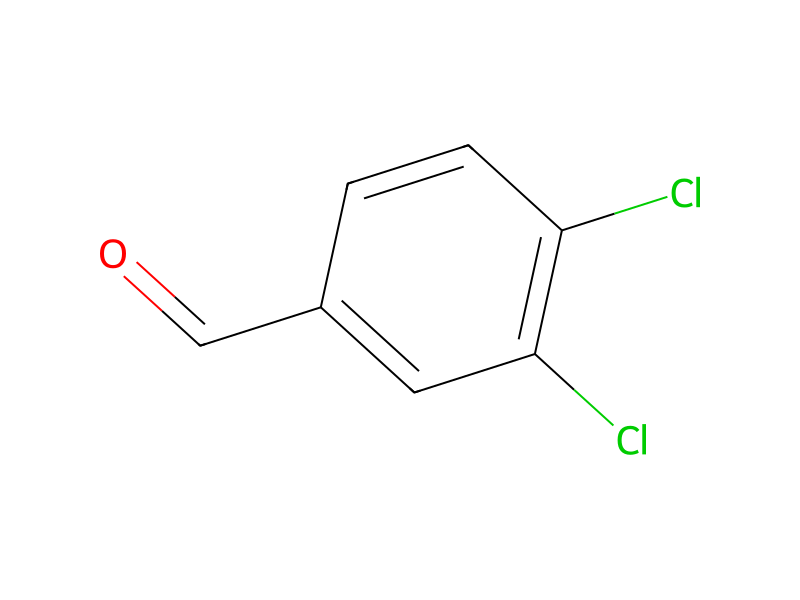
[C:1]([CH:4]1[C:8](=[O:9])[CH2:7][CH2:6][C:5]1=[O:10])(=[O:3])[CH3:2].[Cl:11][C:12]1[CH:13]=[C:14]([CH:17]=[CH:18][C:19]=1[Cl:20])[CH:15]=O.N1CCOCC1.Cl>O.C(O)C>[Cl:11][C:12]1[CH:13]=[C:14]([CH:17]=[CH:18][C:19]=1[Cl:20])[CH:15]=[CH:2][C:1]([CH:4]1[C:8](=[O:9])[CH2:7][CH2:6][C:5]1=[O:10])=[O:3]Participants
7






Procedure
2-Acetyl-1,3-cyclopentanedione (3.13 g.) was treated with 3,4-dichlorobenzaldehyde (4.36 g.) in 140 ml. of ethanol under reflux for 4 hours in the presence of 5 ml. of morpholine. After cooling, the reaction mixture was poured into 150 ml. of water containing 7 ml. of conc. hydrochloric acid. Deposited crystals were separated by filtration and washed with water, and dried. 2-(3,4-Dichlorocinnamoyl)-1,3-cyclopentanedione (2.48 g., 37%) was obtained which showed mp. 190°- 191° C. after recrystallization from dioxane.
Workup
- temperatureAfter cooling
- additionthe reaction mixture was poured into 150 ml
- customDeposited crystals were separated by filtration
- washwashed with water
- customdried
Sources & evidence
- ORD record
- ord-0cc9c682c8d6438daabb77fa6f991bab
- Source dataset
- uspto-grants-1977_01
- Patent number
- US04003936
Reaction notes
Loading…