Propargyl alcohol → Methyl 2-(3-hydroxyprop-1-yn-1-yl)benzoate
Reaction equation

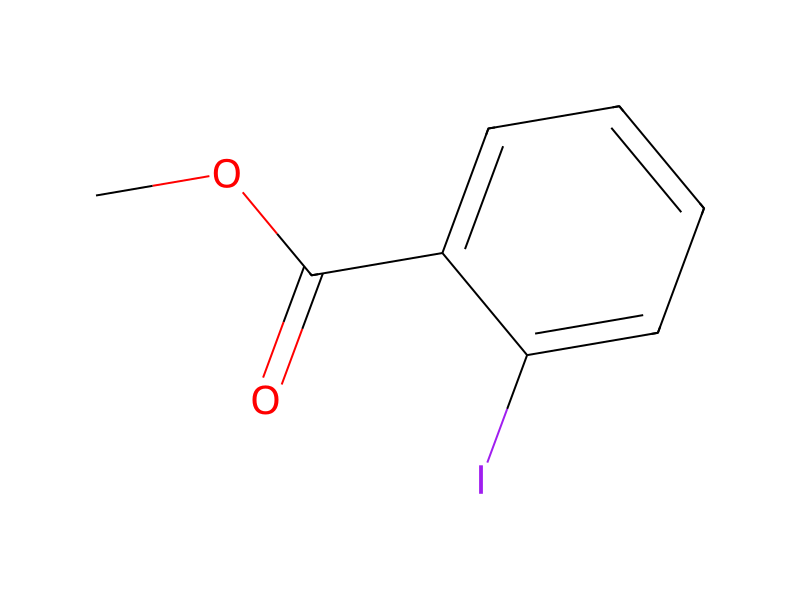
I[C:2]1[CH:11]=[CH:10][CH:9]=[CH:8][C:3]=1[C:4]([O:6][CH3:7])=[O:5].[CH2:12]([OH:15])[C:13]#[CH:14]>Cl[Pd](Cl)([P](C1C=CC=CC=1)(C1C=CC=CC=1)C1C=CC=CC=1)[P](C1C=CC=CC=1)(C1C=CC=CC=1)C1C=CC=CC=1.[Cu](I)I.C(NCC)C>[OH:15][CH2:12][C:13]#[C:14][C:2]1[CH:11]=[CH:10][CH:9]=[CH:8][C:3]=1[C:4]([O:6][CH3:7])=[O:5]Participants
6





Procedure
Step 1--A mixture of methyl o-iodobenzoate (9.17 g), propargyl alcohol (3.06 ml) and diethyl amine (90 ml) is treated with bis(triphenylphosphine)palladium chloride (1.23 g) and copper iodide (333 mg) and the reaction is stirred at 20°-25° under nitrogen for 18 hrs. The reaction is then filtered through a filter agent and concentrated. The resulting residue is partitioned between water and dichloromethane. The combined organic phases are washed once with saline, dried over magnesium sulfate, filtered and concentrated to an oil. Purification by silica gel chromatography gives methyl o-(1-hydroxy-2-propyn-3-yl)benzoate (CXIX).
Workup
- filtrationThe reaction is then filtered through a filter agent
- concentrationconcentrated
- customThe resulting residue is partitioned between water and dichloromethane
- washThe combined organic phases are washed once with saline
- dry with materialdried over magnesium sulfate
- filtrationfiltered
- concentrationconcentrated to an oil
- customPurification by silica gel chromatography
Sources & evidence
- ORD record
- ord-7078d2e282ea4def9eba75df7b340ae7
- Source dataset
- uspto-grants-1999_03
- Patent number
- US05877317
Reaction notes
Loading…