Pyridine → Methyl 8-cyano-5,6-dihydro-2-naphthoate
Reaction equation

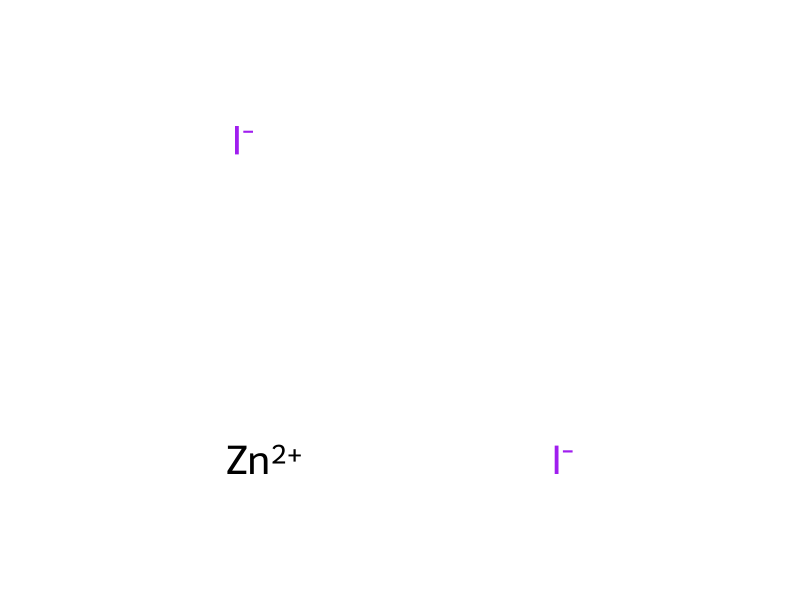
[CH3:1][O:2][C:3]([C:5]1[CH:14]=[C:13]2[C:8]([CH2:9][CH2:10][CH2:11][C:12]2=O)=[CH:7][CH:6]=1)=[O:4].C[Si]([C:20]#[N:21])(C)C.N1C=CC=CC=1.P(Cl)(Cl)(Cl)=O>C1C=CC=CC=1.[I-].[Zn+2].[I-]>[C:20]([C:12]1[C:13]2[CH:14]=[C:5]([C:3]([O:2][CH3:1])=[O:4])[CH:6]=[CH:7][C:8]=2[CH2:9][CH2:10][CH:11]=1)#[N:21]Participants
Reactant 4




Product 1

Reagents, catalysts & solvents 2

Procedure
A solution of 1-tetralon-7-carboxylic acid methyl ester (3.50 g, 0.017 mol), trimethylsilylcyanide (1.98 g, 0.02 mol) and zinc iodide (0.10 g) in benzene (20 mL) was stirred at ambient temperature over 15 hours. Then added, sequentially and dropwise, was pyridine (20 mL) and phosphorous oxychloride (4.0 mL, 6.55 g, 0.0425 mol). The reaction mixture was stirred at reflux over 1 hour then evaporated to dryness under reduced pressure. The residue was taken up in chloroform, backwashed with water, dried over anhydrous magnesium sulfate and evaporated to dryness under reduced pressure to give methyl 8-cyano-5,6-dihydro-2-naphthoate (1.70 g, 0.008 mol, 47%) as a yellow solid. mp=73°-75° C.; 1H NMR (CDCl3) d 8.0-7.9 (m, 1H), 7.3-7.2 (m, 1H), 6.95 (t, 1H, J=4.8 Hz), 3.95 (s, 3H), 2.9 (t, 2H, J=8.3 Hz), 2.6-2.4 (m, 3H).
Workup
- additionThen added
- temperatureat reflux over 1 hour
- customthen evaporated to dryness under reduced pressure
- dry with materialdried over anhydrous magnesium sulfate
- customevaporated to dryness under reduced pressure
Sources & evidence
- ORD record
- ord-1171d27f375644f8bd624b03188ae1e3
- Source dataset
- uspto-grants-1999_03
- Patent number
- US05879657
Reaction notes
Loading…