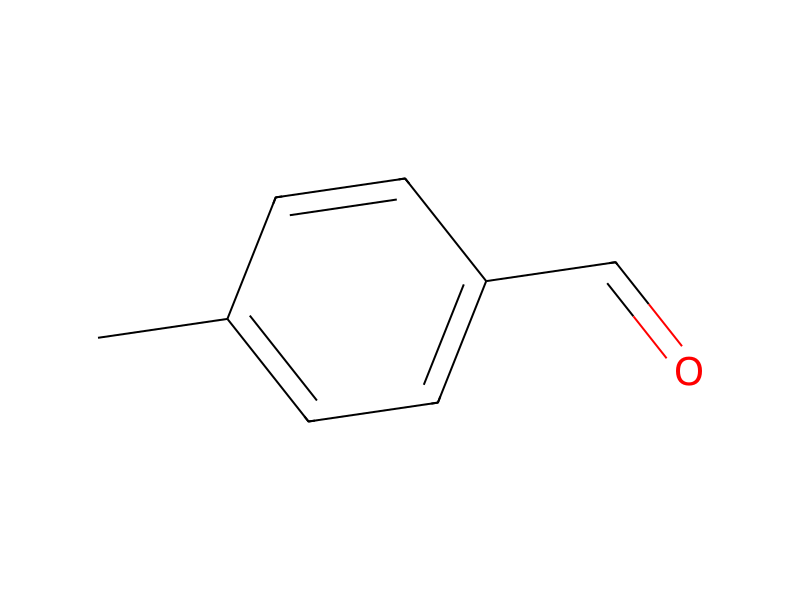
4-Methylbenzaldehyde → 6-Methylisoquinolin-5-amine
Reaction equation

CC1C=CC(C=O)=CC=1.[CH3:10][C:11]1[C:12]([N+:21]([O-])=O)=[C:13]2[C:18](=[CH:19][CH:20]=1)[CH:17]=[N:16][CH:15]=[CH:14]2.[Sn](Cl)(Cl)(Cl)Cl>C(O)(=O)C.Cl>[NH2:21][C:12]1[C:11]([CH3:10])=[CH:20][CH:19]=[C:18]2[C:13]=1[CH:14]=[CH:15][N:16]=[CH:17]2Participants
Reactant 3


Product 1

Reagents, catalysts & solvents 2


Procedure
By carrying out the preparation according to Stages 1 and 2 of PREPARATION IX above and by using 4-methylbenzaldehyde as starting reactant, 6-methyl-5-nitroisoquinoline is prepared. 4.0 g of 6-methyl-5-nitroisoquinoline are dissolved in a solution of 80 ml of acetic acid and 40 ml of concentrated hydrochloric acid, 40.0 g of tin chloride are then added and the reaction mixture is heated at reflux for 3 hours and then left for 12 hours at room temperature. The crystals formed are filtered off, taken up in water and basified with 10N sodium hydroxide. The extraction is carried out with dichloromethane and the organic phase is dried and evaporated to dryness to obtain 0.52 g of yellow crystals. 1H NMR (CDCl3): 2.37 (s, 3H, --CH3), 4.18 (broad s exchangeable with D2O, 2H, --NH2), 7.29 (d, J=8.8, 1H, H7), 7.44 (d, J=8.8, 1H, H4), 7.53 (d, J=6.2, 1H, H8), 8.49 (d, J=5.8, 1H, H3), 9.13 (s, 1H, H1).
Workup
- customis prepared
- additionare then added
- temperaturethe reaction mixture is heated
- temperatureat reflux for 3 hours
- customThe crystals formed
- filtrationare filtered off
- extractionThe extraction
- customthe organic phase is dried
- customevaporated to dryness
Sources & evidence
- ORD record
- ord-edcf6149238b46239ade4ad91f4e26ae
- Source dataset
- uspto-grants-1999_03
- Patent number
- US05880135
Reaction notes
Loading…