Triethylamine → Triethylsilane
Reaction equation

C(OC(=O)N[CH2:11][CH:12]1[CH2:17][CH:16]2[CH2:18][CH:14]([C:15]2([CH3:20])[CH3:19])[C:13]1=[CH2:21])C1C=CC=CC=1.[CH2:23]([SiH:25]([CH2:28][CH3:29])[CH2:26][CH3:27])[CH3:24].[CH2:30]([N:32](CC)CC)C>C(Cl)Cl.[Pd](Cl)Cl>[CH3:20][C:15]1([CH3:19])[CH:14]2[CH2:18][CH:16]1[CH2:17][CH:12]([CH2:11][CH2:30][NH2:32])[C:13]2=[CH2:21].[CH2:23]([SiH:25]([CH2:28][CH3:29])[CH2:26][CH3:27])[CH3:24]Participants
7
Reactant 3

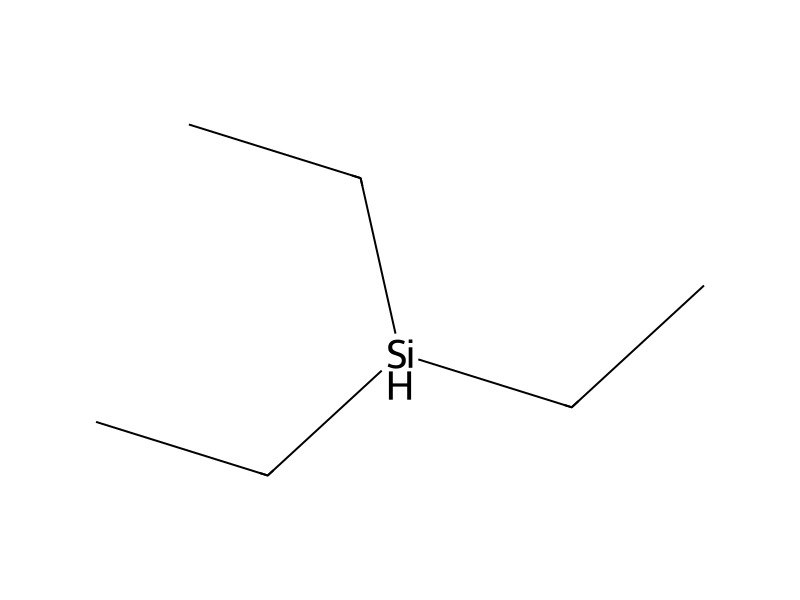

Product 2

Reagents, catalysts & solvents 2


Procedure
(6,6-Dimethyl-2-methylene-bicyclo[3.1.1]hept-3-ylmethyl)-carbamic acid benzyl ester (988 mg, 3.30 mmol) was dissolved in CH2Cl2 (20 ml) under an atmosphere of dry N2. To this solution was added triethylsilane (2.10 ml, 13.2 mmol), triethylamine (330 μl, 2.37 mmol) and palladium(II) chloride (165 mg). The reaction was then heated to reflux and stirred at this temperature for one hour. The reaction was then quenched with the addition of saturated ammonium chloride solution (3.0 ml). The reaction is then partitioned between CH2Cl2 and 0.1 N NaOH. The CH2Cl2 layer was dried over MgSO4, filtered and concentrated under vacuum to give the titled compound along with unreacted triethylsilane: C.I. m/z 166 [M+1].
Workup
- temperatureThe reaction was then heated
- temperatureto reflux
- customThe reaction was then quenched with the addition of saturated ammonium chloride solution (3.0 ml)
- customThe reaction is then partitioned between CH2Cl2 and 0.1 N NaOH
- dry with materialThe CH2Cl2 layer was dried over MgSO4
- filtrationfiltered
- concentrationconcentrated under vacuum
Sources & evidence
- ORD record
- ord-8645d326b3bc446fbbcaae81fd254b4c
- Source dataset
- uspto-grants-2000_06
- Patent number
- US06071935
Reaction notes
Loading…