Hydrochloric Acid → (+-)-3-Quinuclidinol
Reaction equation

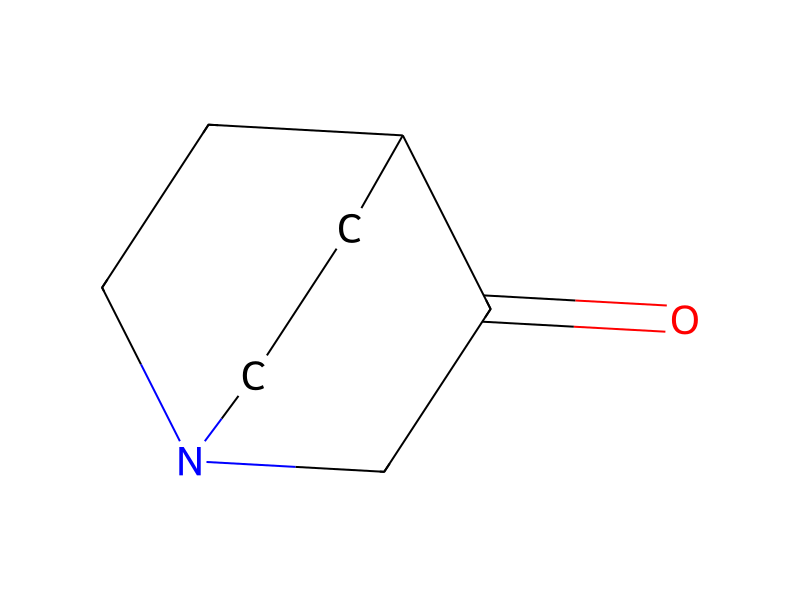
[N:1]12[CH2:8][CH2:7][CH:4]([CH2:5][CH2:6]1)[C:3](=[O:9])[CH2:2]2.Cl.C[O-].[Na+].C(OCC)C>C(O)/C=C/CCC.C(O)(C)C>[OH:9][CH:3]1[CH:4]2[CH2:7][CH2:8][N:1]([CH2:6][CH2:5]2)[CH2:2]1Participants
7
Reactant 4



Product 1

Reagents, catalysts & solvents 2


Conditions
- Temperature
- 200 °C
Procedure
A 100 ml autoclave ("Magnedrive II", Autoclave Engineers Europe) fitted with a hollow-shaft high-speed stirrer (Dispersimax®) was charged with 5.0 g of quinuclidin-3-one (prepared from the hydrochloride by reaction with sodium methoxide and extraction with diethyl ether), 45 ml of isopropyl alcohol and 0.25 g of catalyst (from Example 1), flushed with nitrogen and placed under a nitrogen pressure of 10 bar at room temperature. While stirring (1500 min-1), the mixture was heated to 200° C. and held at this temperature for 8 hours. The yield was determined as 97.3 percent by means of GC. Repeating the experiment using the same catalyst still gave a yield of 92.8 percent after a reaction time of 13 hours.
Workup
- customflushed with nitrogen
- customat room temperature
- waitheld at this temperature for 8 hours
- customstill gave a yield of 92.8 percent after a reaction time of 13 hours
Sources & evidence
- ORD record
- ord-ef8c28cc793347de886802cdd9b131fa
- Source dataset
- uspto-grants-2000_06
- Patent number
- US06075145
Reaction notes
Loading…