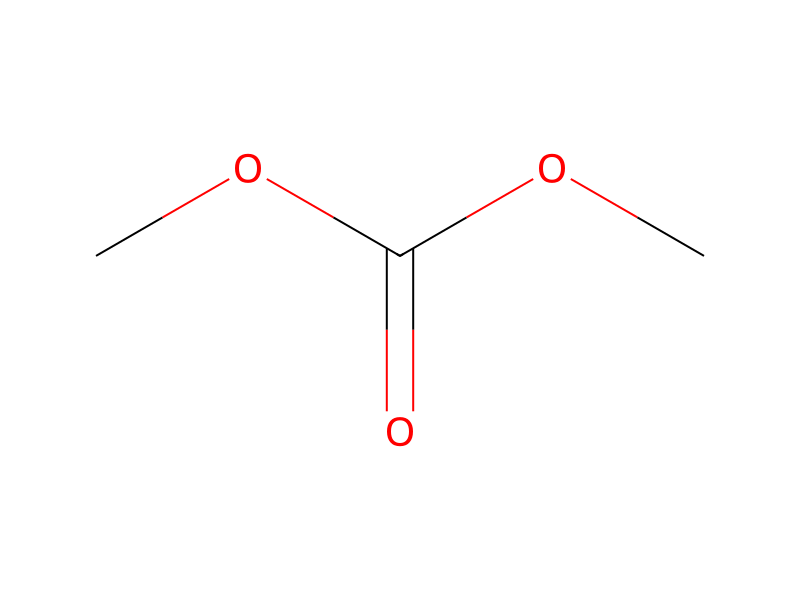
Dimethyl Carbonate → 3,4-Dihydro-2-hydroxynaphthalenecarboxylic Acid, Methyl Ester
Reaction equation

[CH2:1]1[C:10]2[C:5](=[CH:6][CH:7]=[CH:8][CH:9]=2)[CH2:4][CH2:3][C:2]1=[O:11].C([N-]C(C)C)(C)C.[Li+].[C:20](=O)([O:23]C)[O:21][CH3:22]>O1CCCC1>[OH:11][C:2]1[CH2:3][CH2:4][C:5]2[C:10](=[CH:9][CH:8]=[CH:7][CH:6]=2)[C:1]=1[C:20]([O:21][CH3:22])=[O:23]Participants
5
Reactant 3


Product 1

Reagents, catalysts & solvents 1

Conditions
- Temperature
- 0 °C
Procedure
To a stirred solution of 2-tetralone (25.0 g, 171 mmol) in dry tetrahydrofuran (250 ml) at 0° C. under argon was added lithium diisopropylamide (111 ml, 2M solution, 222 mmol). After stirring at 0° C. for 1 h, dimethyl carbonate was added (145 ml, 1710 mmol). After stirring at 0° C. for 0.5 h, the reaction mixture was warmed to room temperature, and then heated at reflux for 16 h. The mixture was then cooled to 0° C. and quenched with hydrochloric acid (1M, 450 ml). The resulting mixture was extracted with ethyl acetate (3×1000 ml) and the combined extracts were washed with brine (1000 ml) then dried (Na2SO4) and evaporated in vacuo to afford the title compound as a dark brown oil (36.3 g, 100%).
Workup
- stirringAfter stirring at 0° C. for 0.5 h
- temperaturethe reaction mixture was warmed to room temperature
- temperatureheated
- temperatureat reflux for 16 h
- temperatureThe mixture was then cooled to 0° C.
- customquenched with hydrochloric acid (1M, 450 ml)
- extractionThe resulting mixture was extracted with ethyl acetate (3×1000 ml)
- washthe combined extracts were washed with brine (1000 ml)
- dry with materialthen dried (Na2SO4)
- customevaporated in vacuo
Sources & evidence
- ORD record
- ord-b9e614113f68465c89e5501eda65ed59
- Source dataset
- uspto-grants-2000_06
- Patent number
- US06080752
Reaction notes
Loading…